Bratislava is one of Europe’s smallest and most walkable capitals, yet its rich history and strategic location have given the city a remarkable cultural and historical importance. Sitting on the banks of the Danube, where Slovakia, Austria, and Hungary come together, it has been shaped by the cultures around it for centuries. This unique location turned Bratislava into an important cultural and trading crossroads in the heart of Central Europe.
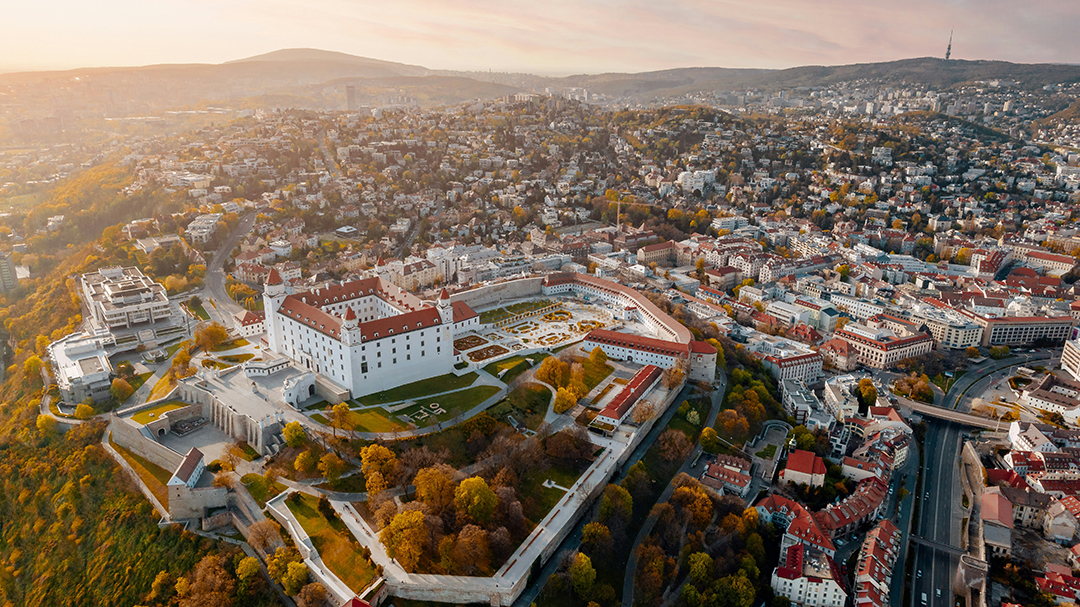
Over the centuries, the city formed part of several empires, including the Kingdom of Hungary and later Austria-Hungary, when Bratislava was still known as Pressburg. For many years, it stood in the shadow of larger neighbours like Vienna and Budapest, while building close cultural and economic ties with both cities. Perhaps because it was overlooked for so long, Bratislava still feels like a pleasant surprise, with fewer crowds, lower prices, and a more relaxed atmosphere than many other European capitals. The city is also the only capital in the world that borders two neighbouring countries.
One of the first things visitors notice is how easy Bratislava is to get around. Most of the main sights are within walking distance, the streets are compact, and the pace of life feels noticeably calmer than in larger cities. As we’ve already explored in previous issues of our online magazine, Bratislava brings together striking contrasts, from its medieval old town and socialist era architecture to stylish modern cafés and traditional restaurants serving classic Slovak dishes.
Bratislava also has many green spaces and easy access to nature that give the city an open feel and make it easy to escape the bustle whenever you need a break. With its rich history, laid back atmosphere, and easy-going charm, Bratislava makes an ideal choice for a short city break or a stop along a wider journey through this part of Europe.
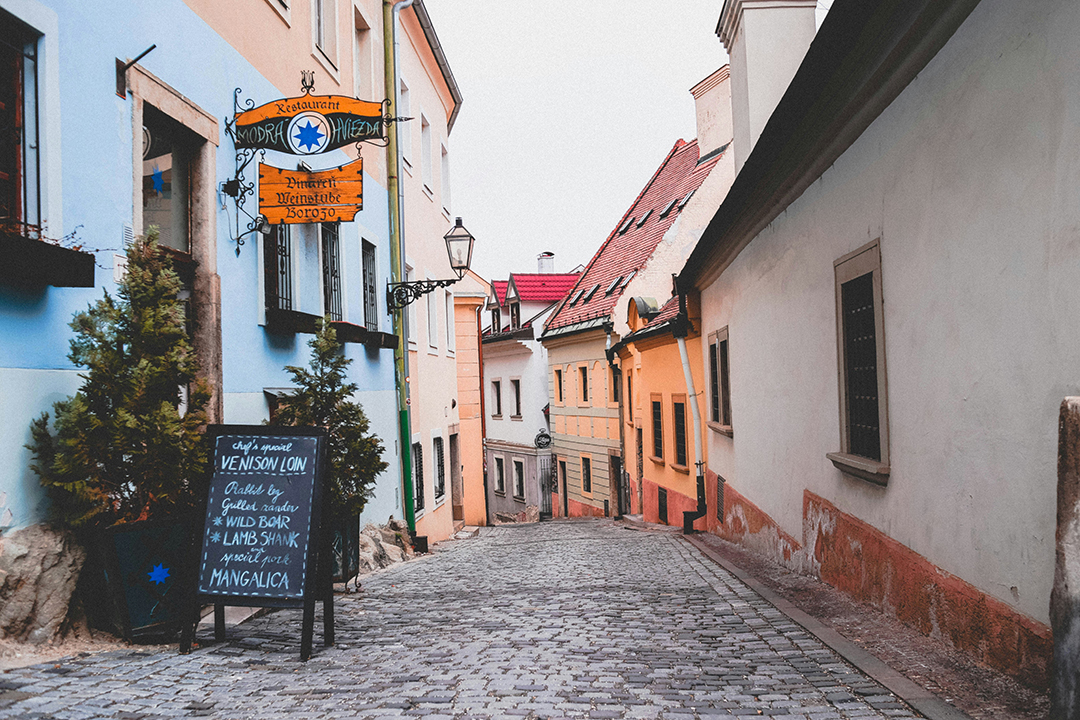
Bratislava’s Old Town, known as Staré Mesto, is compact, picturesque, and perfect for exploring on foot. Its narrow cobbled streets, pastel coloured baroque and rococo buildings, and small hidden squares create a warm atmosphere where history still feels part of everyday life.
In the heart of Old Town is Hlavné námestie, the main square, which is lined with historic buildings, elegant palaces, and busy cafés where locals and visitors like to hang out throughout the day. One of the oldest stone buildings in Bratislava, the Old Town Hall is now home to the City Museum, and its tower offers some of the best views across the rooftops of the Old Town and towards the castle in the distance.
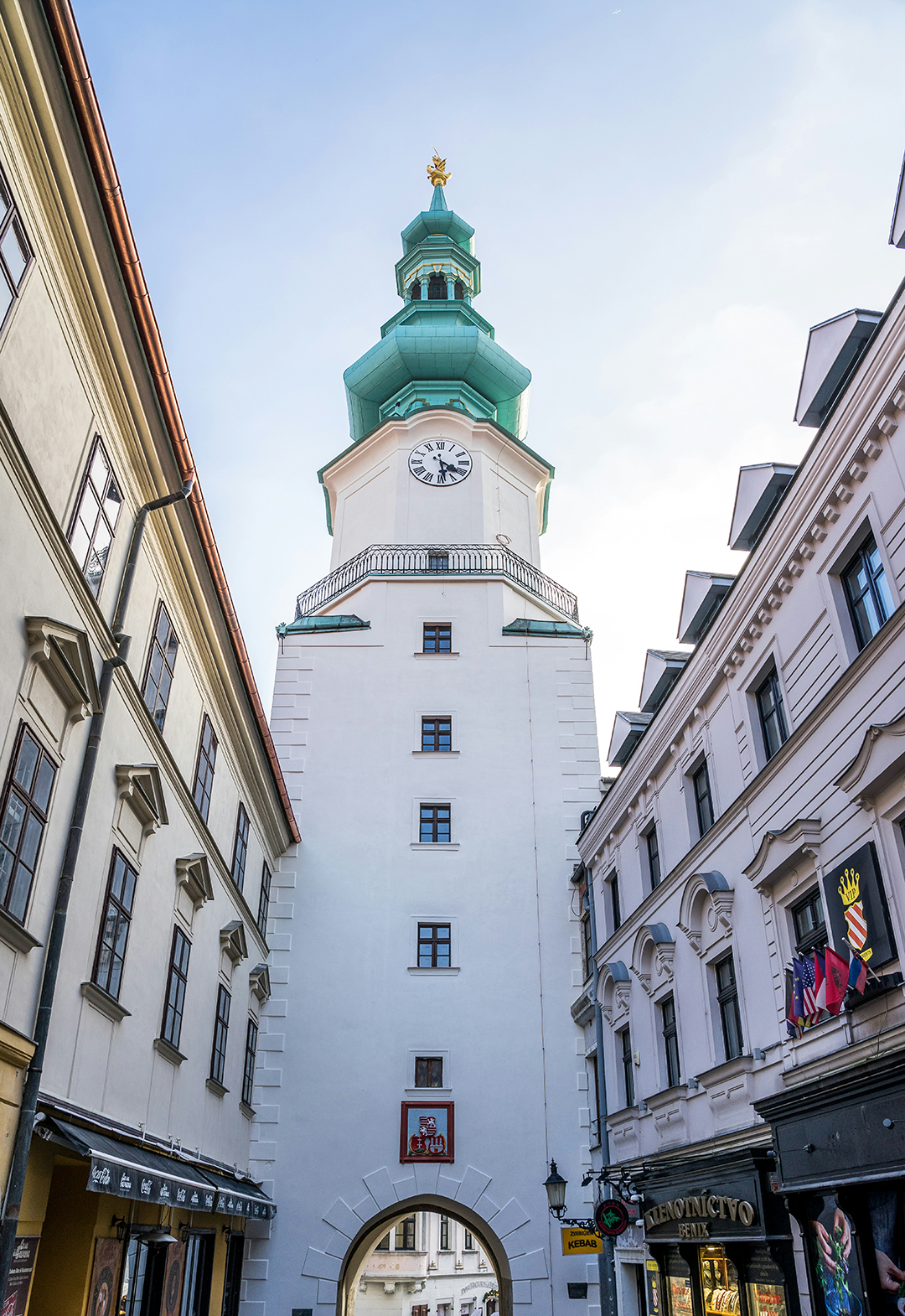
Another of Bratislava’s landmarks is Michael’s Gate, the only surviving medieval city gate, which once served as both a defensive entrance and a grand gateway into the city. Above it, there is a 51-metre-high baroque tower where you can also see an exhibition dedicated to historic weapons.
It is best to explore this part of the city slowly and without a plan. Almost every street has some kind of interesting architectural detail, statue or piece of history worth noticing. As you wander, you’ll come across the famous bronze statues that have become some of Bratislava’s most recognisable symbols. The most famous is Čumil, the man peeking out from a sewer, while another local favourite is Schöne Náci, a figure from old Bratislava remembered for his elegant clothes and habit of greeting passers-by.
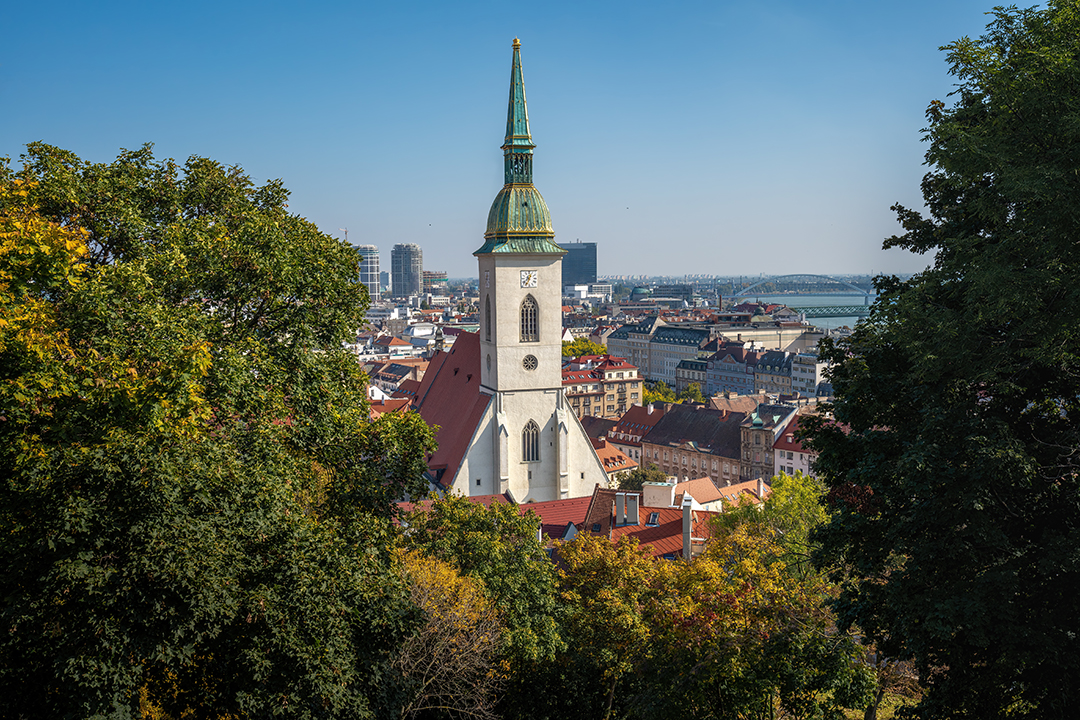
The Old Town is not simply a historic quarter, but also a lively part of the city where culture and modern life exist side by side. Another important landmark is St Martin’s Cathedral, which stands near the entrance to the Old Town beside the remains of the old city walls, and once served as the coronation church of the Kings of Hungary.
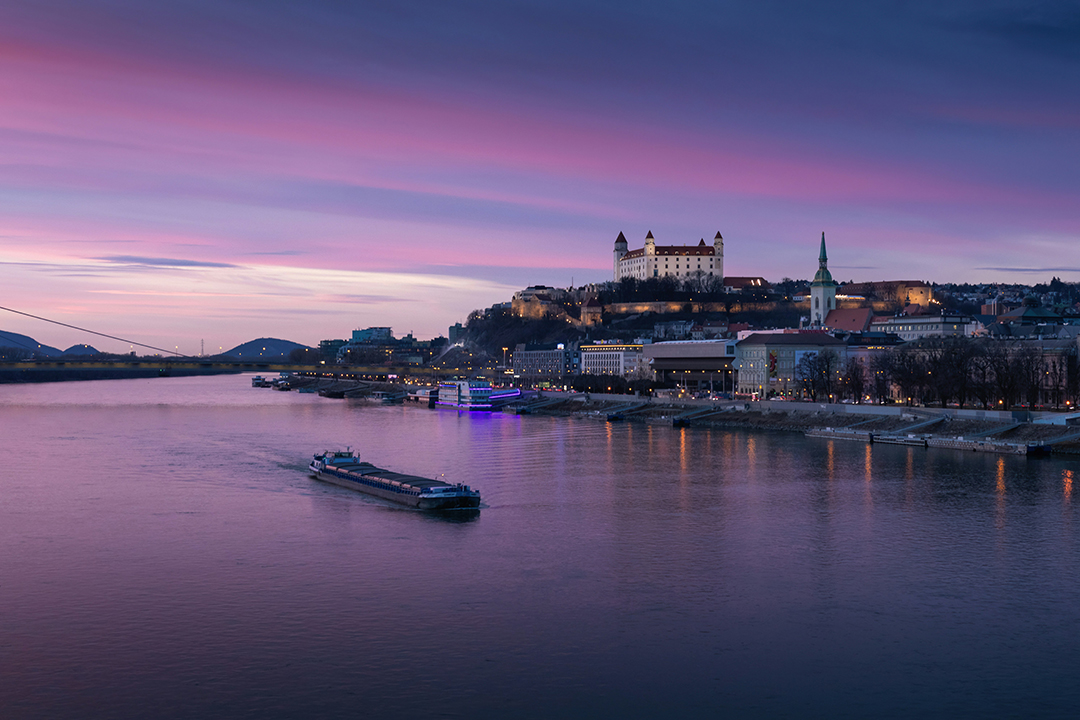
Bratislava Castle, known for its striking shape and four corner towers, rises above the Danube and can be seen from almost every part of the city. Its unusual shape has even earned it nicknames like “the upside-down table” and “the bed”. For centuries, the castle played an important role in defending and governing the region. It served as a residence for the Kings of Hungary and became an important political and military centre. The castle you see today is the result of a major reconstruction, after a huge fire in 1811 left it abandoned and in ruins for more than a century before it was restored in the second half of the 20th century. Its restoration also strengthened its role as a symbol of Slovak identity, especially after the country gained independence.
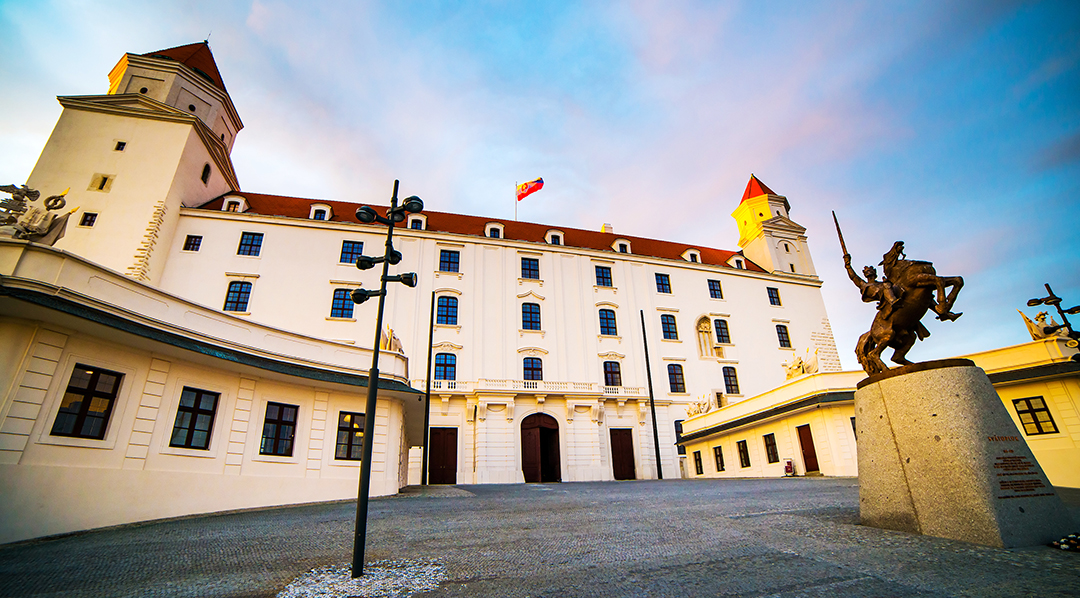
Today, the castle is home to exhibitions from the Slovak National Museum, where visitors can explore the story of Slovakia from prehistoric times right through to the modern day. Some of the most interesting parts of the castle are the royal rooms and exhibitions dedicated to the period between the 16th and 19th centuries, when Bratislava became the coronation city of eleven Hungarian kings and eight queens after Buda came under Ottoman rule. St Martin’s Cathedral, which stands below the castle, was where these coronations took place.
The terraces around the castle also have some of the best views in the region. On a clear day, you can see wind turbines in Austria, the distant plains of Hungary, the wide stretch of the Danube, and the vast Petržalka district, which shows a completely different side of Bratislava. The castle is far more than a historic landmark; it remains one of the city’s strongest symbols and a constant reminder of both Slovakia’s past and its modern identity.
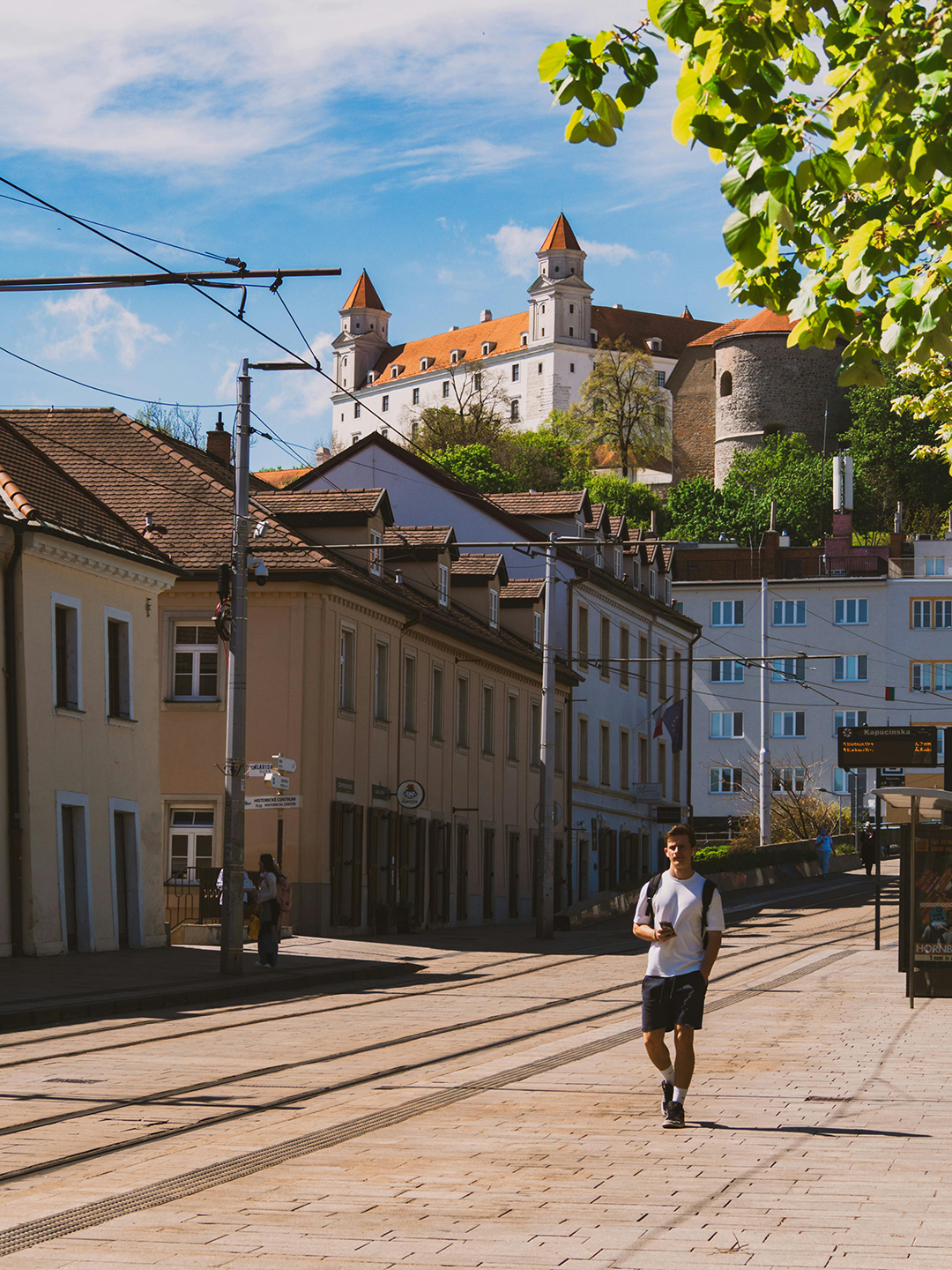
The Danube, which flows through the centre of the city, has always shaped life in Bratislava, and over the past two decades its riverbanks have become home to a more modern side of the capital, with large developments like Eurovea and River Park. The area now has long riverside promenades, cycle paths, and modern buildings that feel completely different from the atmosphere of the Old Town.
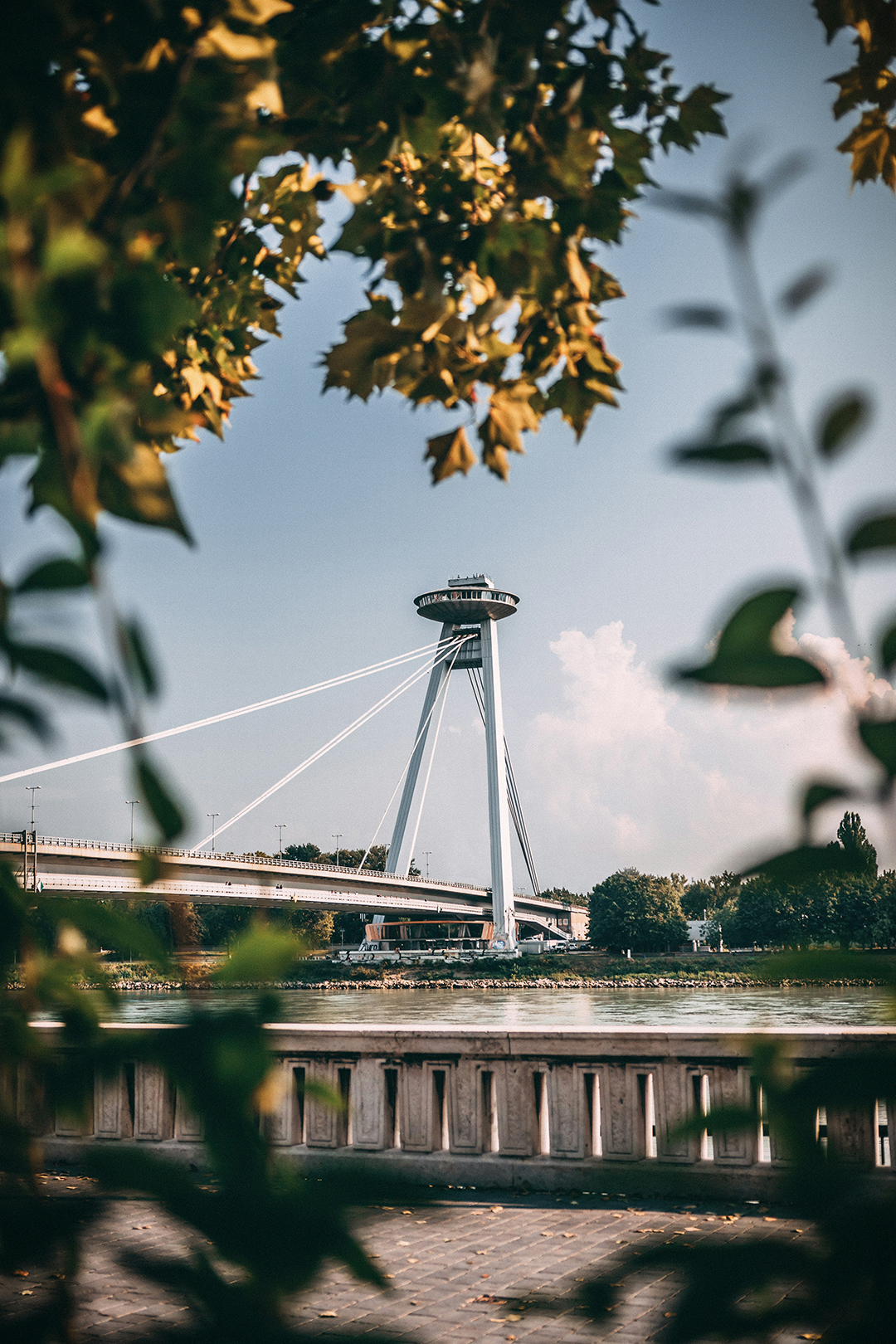
The Danube has become a place to slow down, whether that means spending an evening by the river or seeing the city from the water at a slower pace. One of the most striking sights above the river is the UFO Bridge, with its tower and observation deck shaped like a "flying saucer", where visitors can enjoy panoramic views across the Old Town and the castle. This part of the city is also home to the new building of the Slovak National Theatre, one of the main cultural centres of modern Bratislava.
Bratislava is also surprisingly green for a capital city. Just north of the city are the Little Carpathians where you can find many walking trails, cycling routes, and easy escapes into nature. The area is also known for wine villages like Pezinok and Modra, where you can taste local wines and explore part of Slovakia’s wine route. On the southern bank of the Danube lies Sad Janka Kráľa, one of the oldest public parks in Europe, designed in a classic English style. The park is a popular place for relaxing, picnics, and meeting friends, while the nearby forest park gives locals even more space to walk, cycle, and escape the city without going far from the centre.
Slovak cuisine is hearty, simple, and deeply rooted in rural traditions, while also shaped by the influences of neighbouring countries, especially Austria and Hungary. Bratislava is a great place to try traditional Slovak dishes, especially bryndzové halušky, the country’s best known national dish. The dish consists of soft potato dumplings topped with sheep’s cheese and crispy bacon. Other popular dishes include kapustnica, a rich sauerkraut soup, along with hearty meat dishes like roast duck or goulash, often served with homemade dumplings.
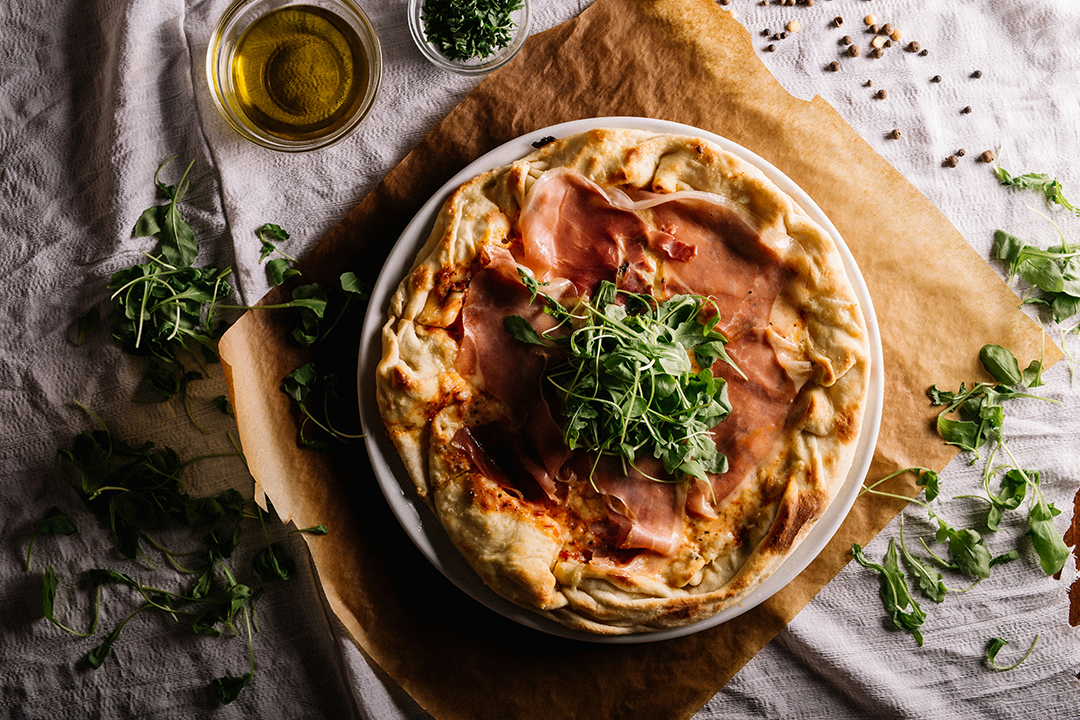
The city has everything from traditional taverns known for their generous portions and homemade dishes to modern restaurants that reinterpret local ingredients and classic recipes in more creative ways. No visit to Bratislava feels complete without stopping by one of the city’s bakeries or cafés for something sweet, whether that is a slice of strudel or a traditional Bratislavský rožok filled with poppy seeds or walnuts.
The wine region just outside the city also produces excellent local wines, which might not be widely known abroad but are well worth trying while in Bratislava. Meals are often served with local beer, as brewing has a long tradition in Slovakia, or with stronger drinks like slivovica and pear brandy. Eating in Bratislava feels simple, warm, and deeply connected to local tradition, the kind of food that tells you a lot about everyday life in the city.
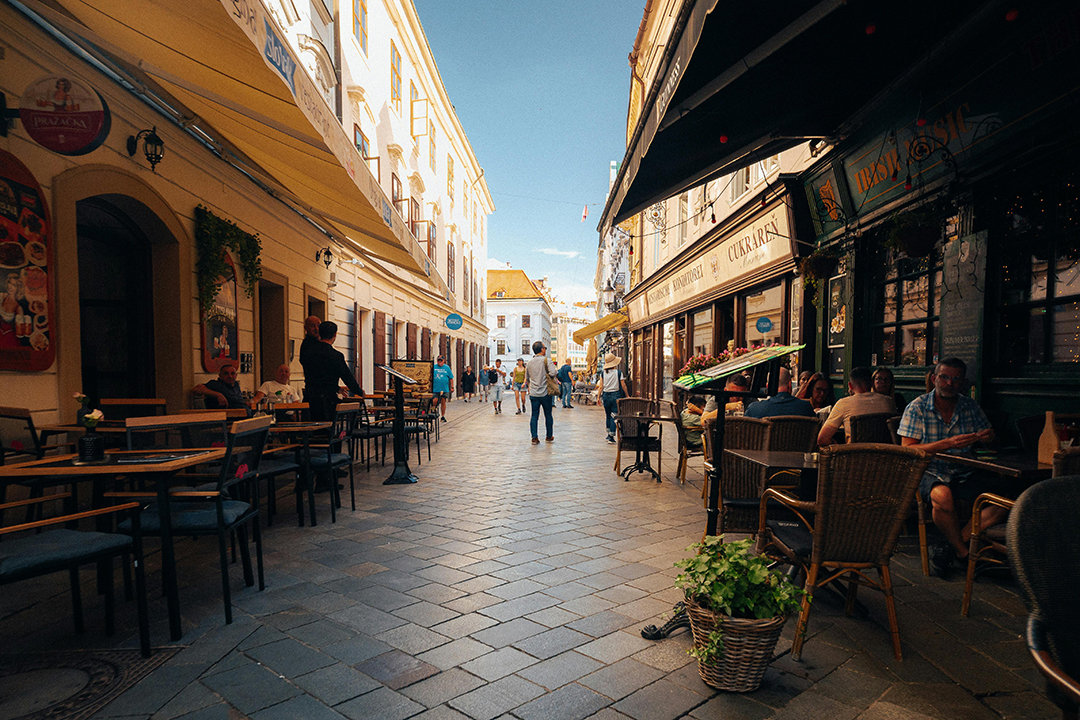
Over the centuries, Bratislava has been known by several names, including Pressburg, Pozsony, and Prešporok, a reminder of the many cultures and languages that have shaped the city. For centuries, Slovaks, Hungarians, Germans, and Jewish communities lived side by side here and left their mark on the city’s architecture, traditions, and even the local dialect. The city was once an important centre of trade and politics and, as already mentioned, served as the coronation city of the Kingdom of Hungary for around 250 years.
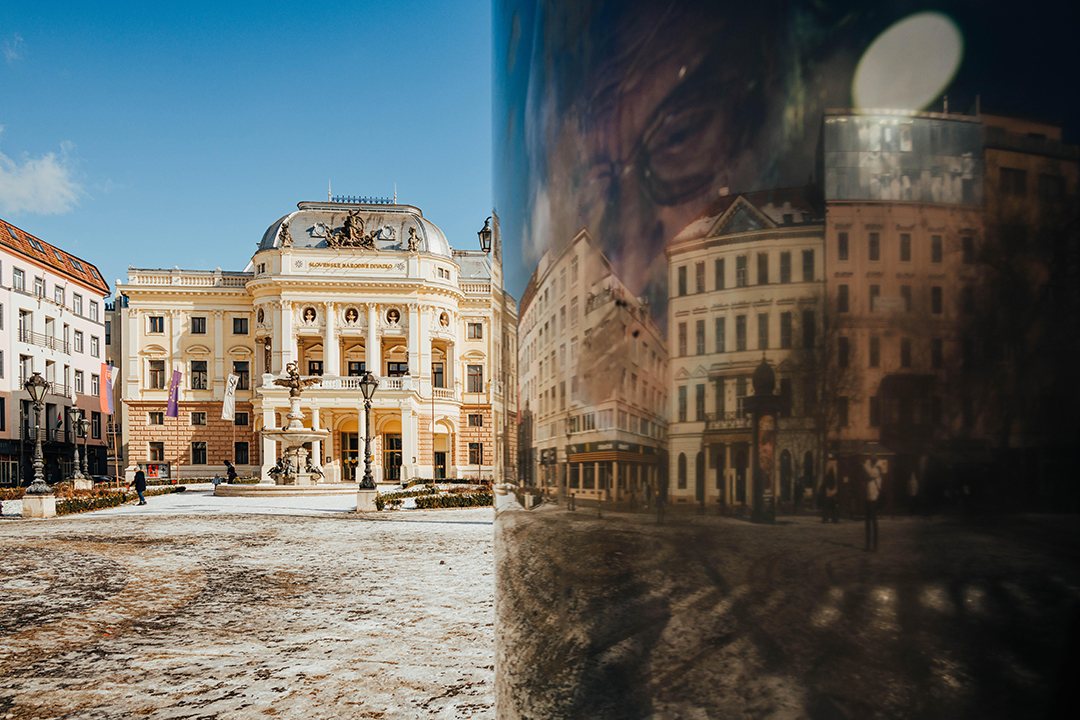
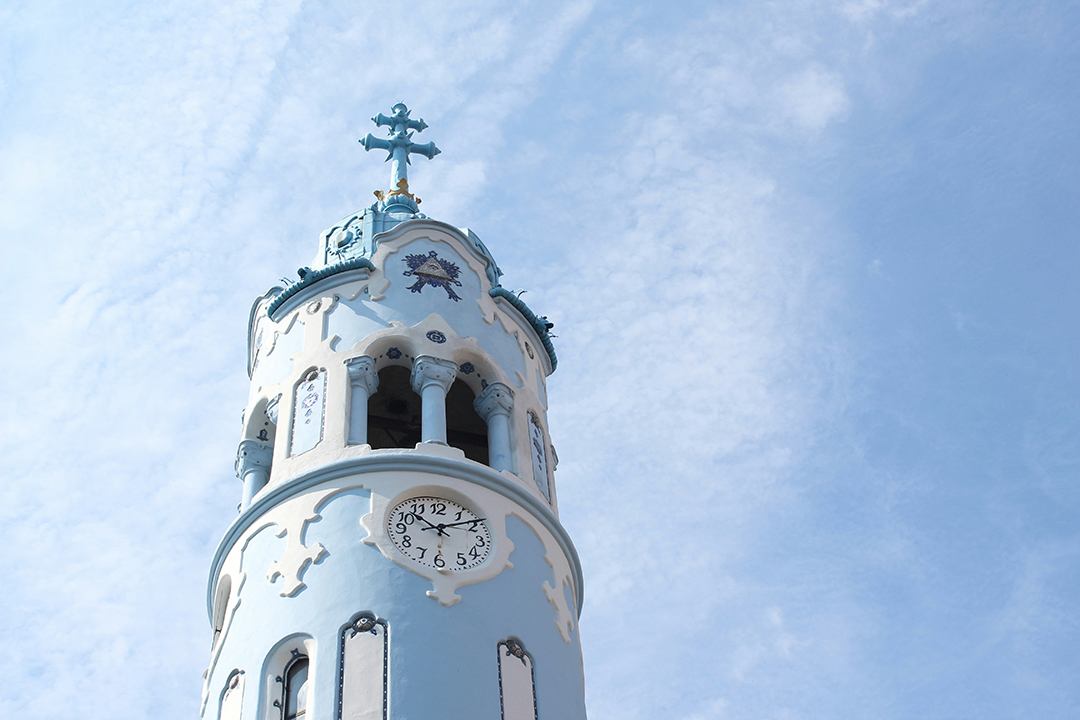
The 20th century brought major changes to Bratislava, from the collapse of Austria-Hungary and the creation of Czechoslovakia to the communist era and finally Slovak independence in 1993. Each period left its mark on the city. Alongside the baroque and classical buildings of the Old Town, Bratislava is also known for its Art Nouveau architecture, especially the Blue Church of St Elizabeth, with its soft blue façade and decorative details that make it one of the city’s most photographed landmarks.
At the same time, the vast Petržalka district, one of the largest socialist era housing estates in Central Europe, stands as a reminder of the city’s rapid development and changing history. The more time you spend in Bratislava, the more these contrasts begin to stand out, and that is often when the city starts to feel most interesting.
Bratislava has never tried to compete with cities like Vienna or Prague when it comes to grand landmarks and big city glamour. Its charm lies in the balance of everything it offers. There is enough history and culture to keep things interesting, enough modern energy to make the city feel alive, and still, plenty of space to explore at a slower, more relaxed pace.
Bratislava often surprises visitors because it does not try too hard to impress at first glance, yet many people leave feeling the city had far more to offer than they expected, including some of the best prices in the region, something I can easily confirm myself. It is also an easy destination to visit, with excellent road and rail connections to both nearby Vienna and Budapest, which makes Bratislava perfect for a short city break.
For travellers looking for an authentic experience, an affordable capital, and a city that still feels lived in rather than built around mass tourism, Bratislava is a brilliant choice. Its location, layered history, and welcoming atmosphere make Bratislava one of those cities that may not top every travel list but tends to stay with people long after they leave. Its compact size also makes the city easy to settle into, and before long, it begins to feel familiar in the best possible way.

Copyright (©) 2010 - 2026 Youth Hostel | Our Privacy Policy | Cookies | | RPC