On the shores of the Baltic Sea lies Copenhagen, Denmark’s capital and largest city, with a population of around 670,000. Its scenic canals, colourful neighbourhoods and impressive royal palaces bring together the city’s traditional side and its modern character. The city is famous for its cycling culture, happy locals and long history, which includes Vikings and the royal family, as well as one of Denmark’s best-known writers, Hans Christian Andersen.
Copenhagen started out as a small fishing village on the east coast of the island of Zealand in the 10th century. Thanks to its location, it soon grew into an important trading port, which is also where its name comes from. The old Danish name Købmandshavn means "merchants’ harbour". The settlement began to take shape in 1167, when Bishop Absalon built a fortress there, and over the centuries that followed, it grew into one of northern Europe’s most important trading centres. Copenhagen came under Danish royal rule in 1416 and became the capital of Denmark in 1443.
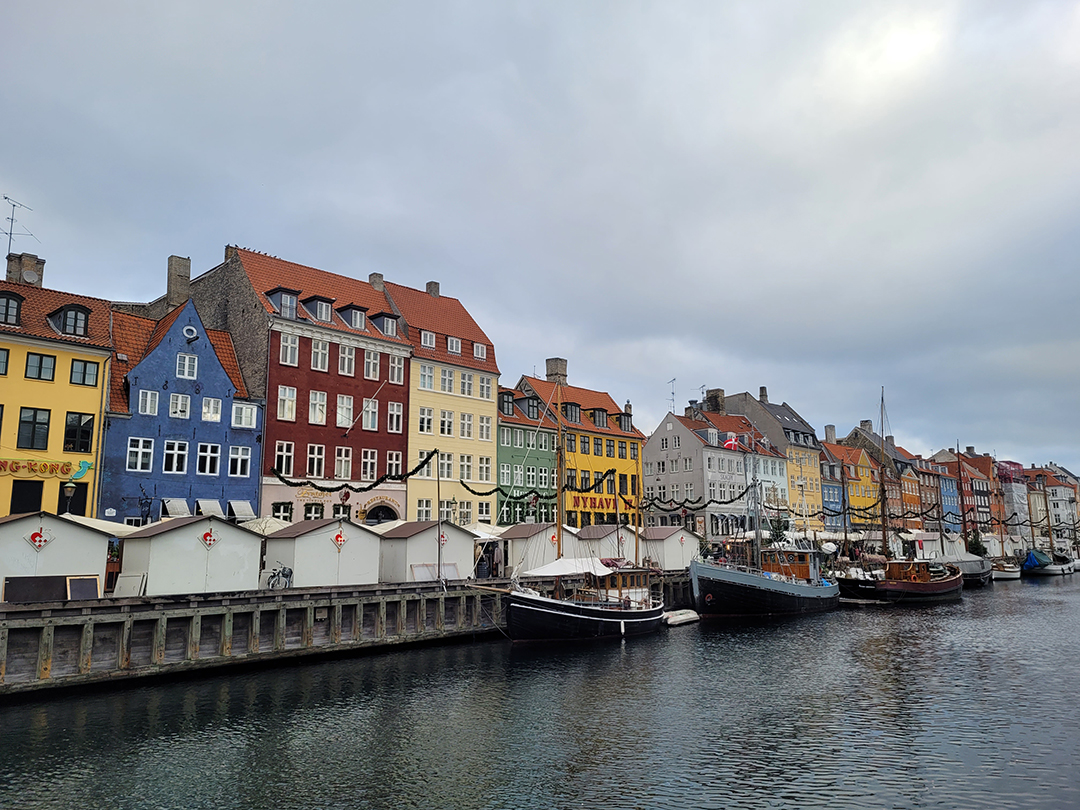
Nyhavn, which means "new harbour", is one of Copenhagen’s best-known areas, with a canal lined with colourful houses, restaurants and cafés. It was built in the 17th century to connect the sea with the city centre and soon became a busy trading port for ships arriving from all over the world. The famous Hans Christian Andersen lived in one of the houses along the canal for a time, and this is where he wrote some of his best work. Nyhavn is also a popular starting point for boat trips along the city’s canals, which are a great way to see Copenhagen from a different perspective.
Tivoli Gardens first opened in 1843 and is one of the oldest amusement parks in the world that you can still visit today. The park is even said to have inspired Walt Disney when he was creating Disneyland, as he loved Tivoli’s atmosphere and the way the park was designed. There are more than 25 rides and attractions to choose from, with something for families as well as those looking for a bit more of a thrill. There are also beautiful gardens, restaurants, theatre shows and concerts to enjoy.
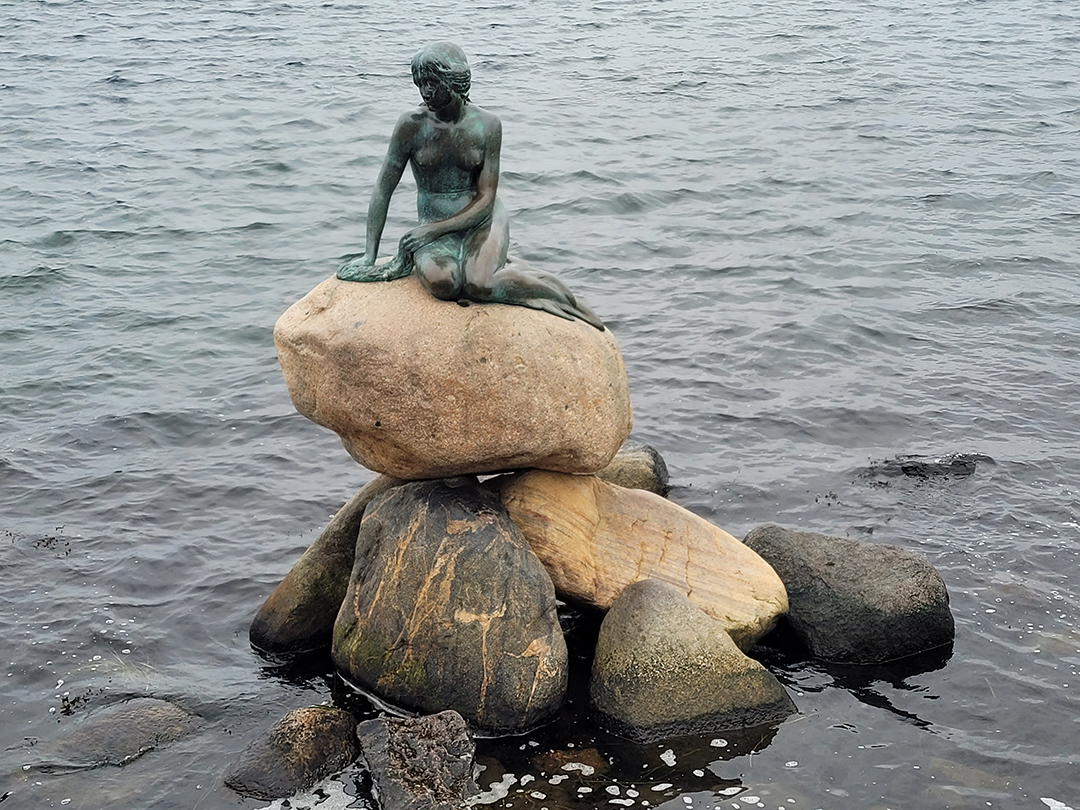
One of Copenhagen’s most famous sights is the Little Mermaid statue, which sits on a rock by the sea along the Langelinie promenade and looks out over the harbour. The bronze statue is only 1.25 metres tall and was created by Danish sculptor Edvard Eriksen in 1913. He based it on Hans Christian Andersen’s fairy tale The Little Mermaid. The story follows a mermaid who gives up her voice and her life in the sea for the prince she loves.
Amalienborg is made up of four almost identical palaces set around an octagonal square. It has been the official residence of the Danish royal family since 1794. The palaces were built in the 18th century and were originally home to noble families. After a fire destroyed the royal palace at Christiansborg, the royal family bought them and made Amalienborg their main residence. Part of Amalienborg is now open as a museum, but the main attraction is the changing of the guard, which takes place every day at noon.
Christiansborg Palace is one of Denmark’s most important buildings, as it is home to the Danish Parliament, the Prime Minister’s Office and the Supreme Court. This makes the palace quite unique, as it’s the only building in the world where all three branches of government are based under one roof. The first castle on this site was built by Bishop Absalon back in 1167. Over the years, it was replaced by a series of royal palaces. The one you see today was built in the early 20th century after the building that was there before was destroyed in a major fire.
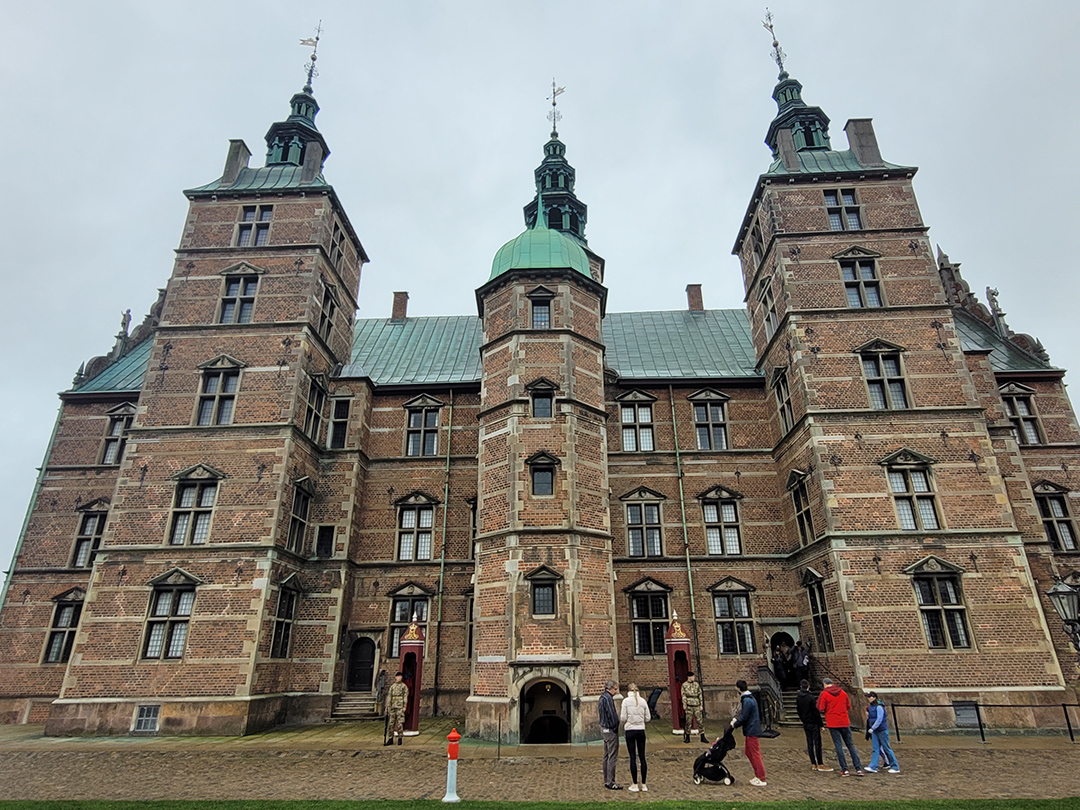
Rosenborg Castle was built in 1634 for the Danish king Christian IV. It was originally built as a summer residence for the royal family, but today it is a museum where you can explore the lavish royal rooms and see some of Denmark’s most valuable royal treasures. The castle is surrounded by the beautiful King’s Garden, the oldest royal garden in Denmark.
Frederik’s Church, also known as the Marble Church, is easy to recognise by its large green dome, one of the largest church domes in Scandinavia. Construction began in 1749 under King Frederik V, but his ambitious plans for a grand church built from Norwegian marble proved too expensive, and work came to a halt in 1770. The church stood unfinished for more than a century before construction finally started again towards the end of the 19th century.
The Round Tower was built in 1642 as an astronomical observatory to provide scientists with a place to observe the stars and study the universe. Today, it is the oldest functioning observatory in Europe. What makes it unusual is the 200-metre spiral walkway, which winds around the centre of the tower seven and a half times instead of using a traditional staircase. The tower stands almost 35 metres tall and offers a great view over Copenhagen’s old town from the top.
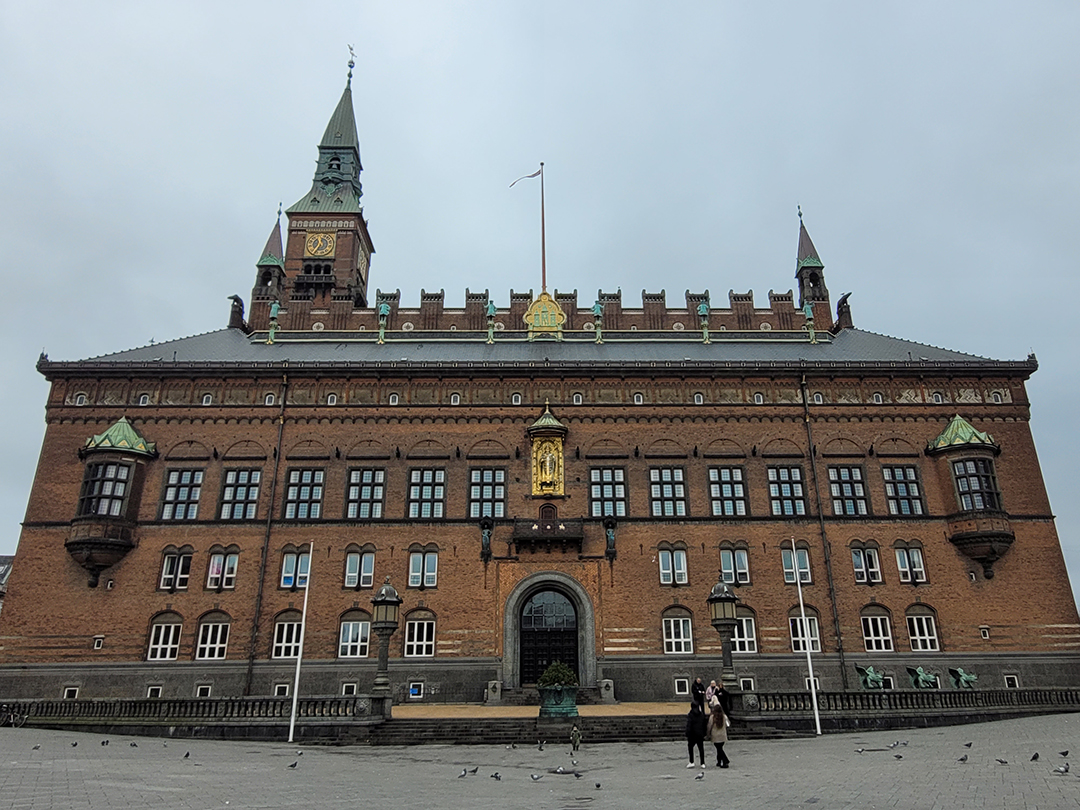
Strøget is Copenhagen’s best-known shopping street, with everything from high-end international brands to local Danish shops, restaurants and cafés. It has been pedestrianised since 1962 and is one of the longest pedestrian shopping streets in Europe. It stretches for around 1.1 kilometres from Rådhuspladsen, the main city square where you’ll find Copenhagen City Hall, to Kongens Nytorv.
Despite its modern character, Copenhagen still has plenty of reminders of its long and eventful past. One of the best ways to explore it and see more of the city is by bike, as its flat streets, excellent cycle paths and safe infrastructure make it one of the most bike-friendly cities in the world. This relaxed way of getting around, together with the Danish focus on sustainability, makes the experience all the more enjoyable. The Danish capital has something for every kind of traveller.

Copyright (©) 2010 - 2026 Youth Hostel | Our Privacy Policy | Cookies | | RPC