In the south of the Czech Republic, only a few dozen kilometres from the Austrian border, lies a town that looks like something straight out of a fantasy book or film. Narrow cobbled streets, colourful historic houses, a grand castle high above the river and the Vltava itself give Český Krumlov the picture-perfect appearance that has made it one of Europe’s most recognisable destinations.
Although the town is small and most visitors only go there on a day trip, there are many reasons to stay a little longer. During the day, the streets are filled with people, but in the evening, the crowds disappear and the town feels completely different. With its well-preserved medieval centre, one of the largest castle complexes in the country and a relaxed atmosphere by the river, Český Krumlov feels quite different from the bigger cities of Central Europe.
The history of Český Krumlov is closely linked to its castle, which has stood above the town for more than seven centuries. The castle was first mentioned in the 13th century, and in the years that followed, powerful noble families such as the Rosenbergs and Schwarzenbergs had a major influence on the town. You can still see their legacy almost everywhere you look.
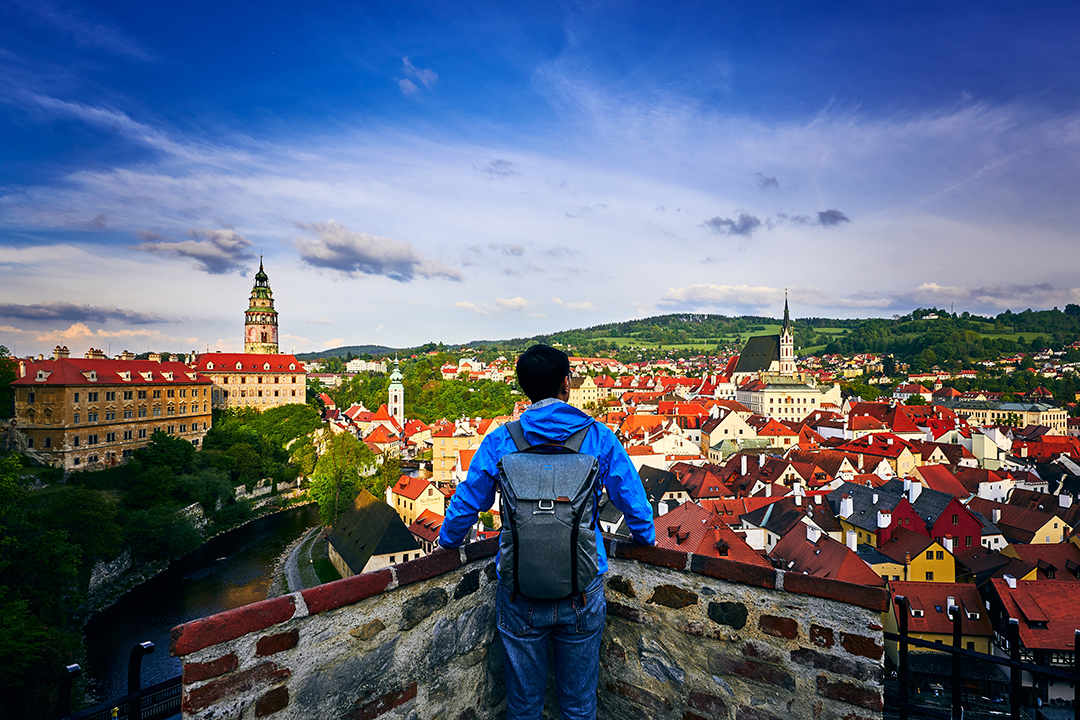
The old town has been a UNESCO World Heritage Site since 1992 thanks to how well it has been preserved. Its medieval layout has barely changed over the centuries, which is one of the main reasons why nearly two million people visit Český Krumlov each year. Here, the Vltava winds around the old town, while the castle and its distinctive tower make this one of the most photographed spots in the Czech Republic.
The best way to get to know Český Krumlov is on foot. The centre is small and easy to explore, with narrow cobbled streets where you’ll want to stop and admire the details of every building. It is small enough that you never really have to worry about getting lost. The main street, Latrán, connects the area below the castle with the old town, and there are lots of smaller streets, courtyards and passageways to explore along the way.
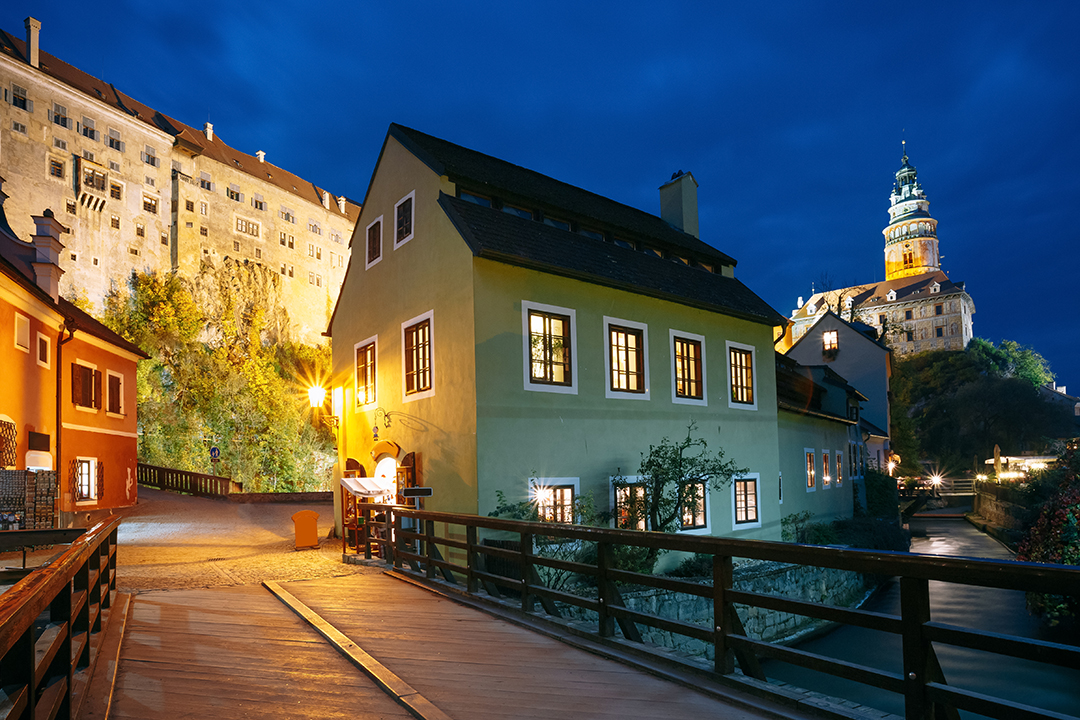
At the heart of the old town is Svornosti Square, surrounded by colourful Renaissance and Baroque houses. From here, it’s only a few minutes’ walk to St Vitus Church, one of Český Krumlov’s most important buildings, but some of the best views are the ones you come across by chance as you wander towards the river and castle.
Although the castle, tower and old town are the main sights, the Vltava is a big part of what makes Český Krumlov special and plays an important role in everyday life. In the warmer months, heading down the Vltava is one of the most popular things to do for both locals and visitors. You can go by canoe or raft, but there are a few weirs to get past along the way.
The castle complex is the second largest in the Czech Republic after Prague Castle and feels almost like a little town of its own. It includes dozens of buildings, five courtyards and large gardens.
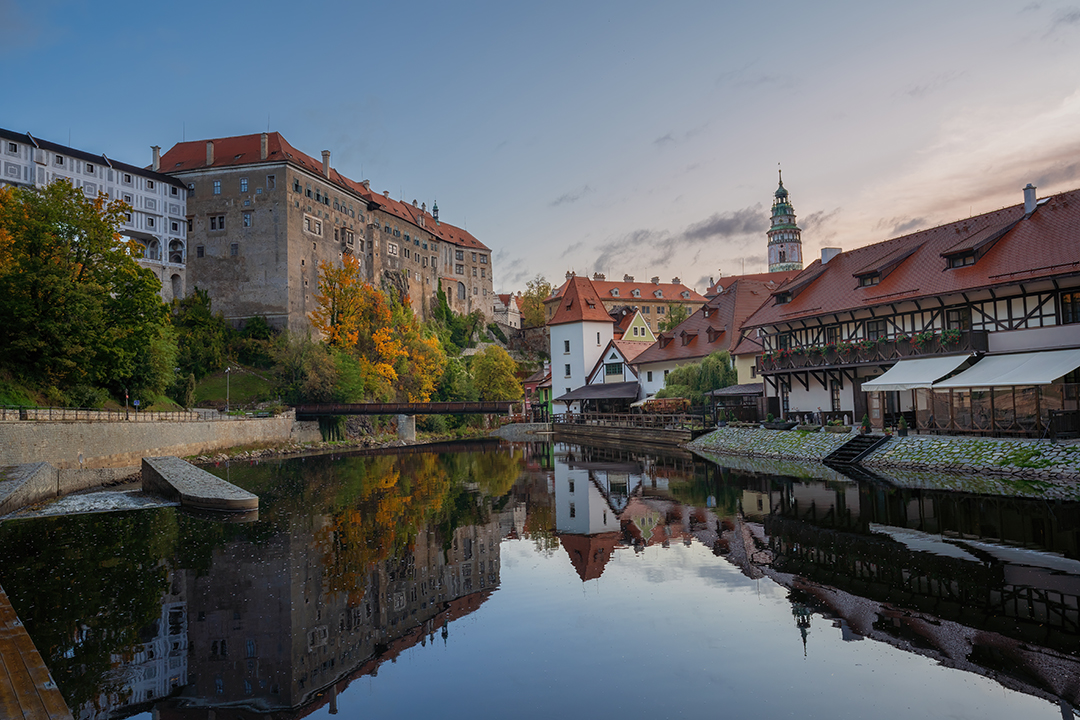
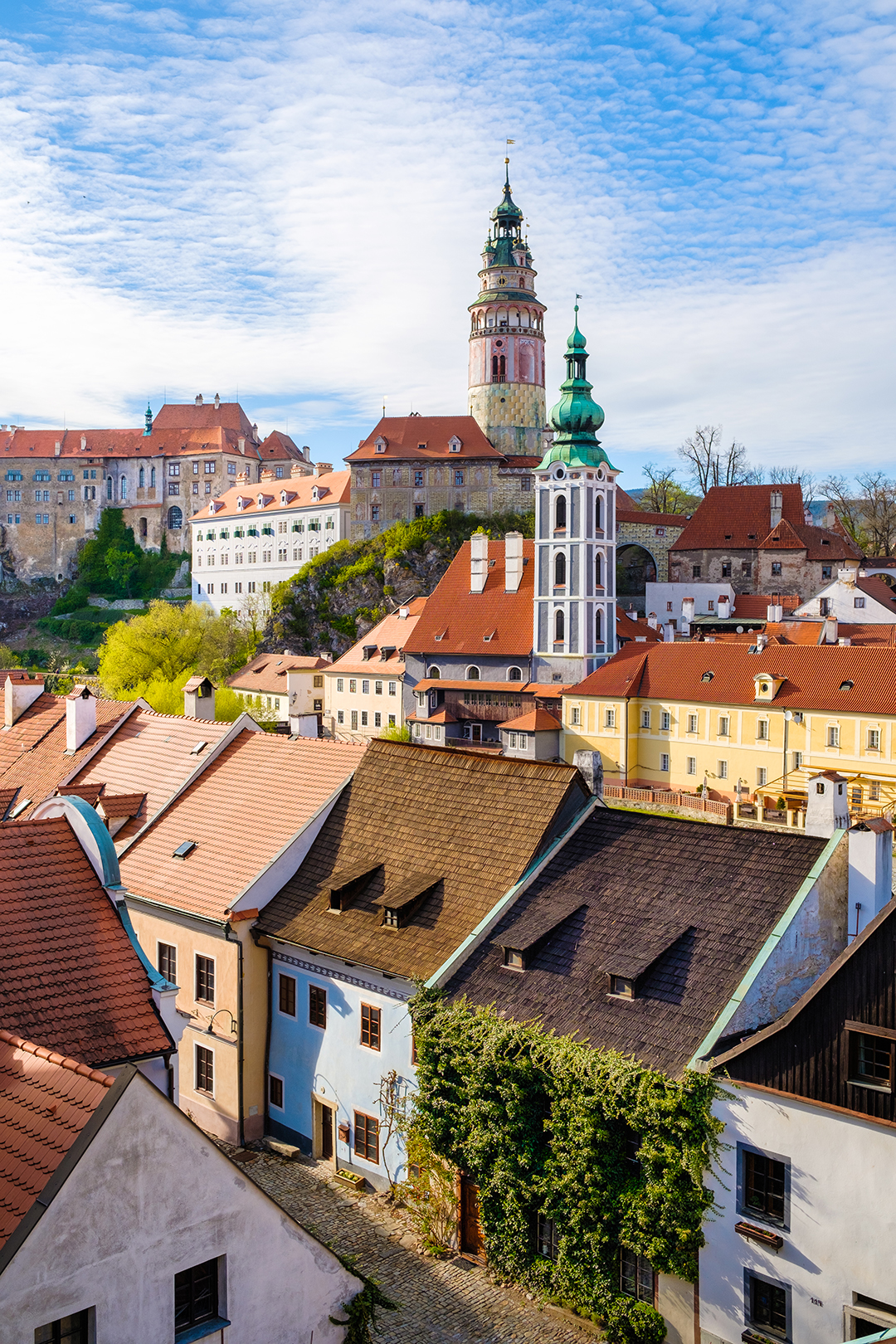
From the old town, you can walk to the castle through the Latrán district. Before you even head inside, you’ll come across one of Český Krumlov’s more unusual traditions: bears living in the moat, a custom linked to the Rosenberg family that dates back several centuries. The most recognisable part of the castle is the colourful tower. From the top, you get one of the best views over Český Krumlov, especially its orange rooftops and the bend in the Vltava.
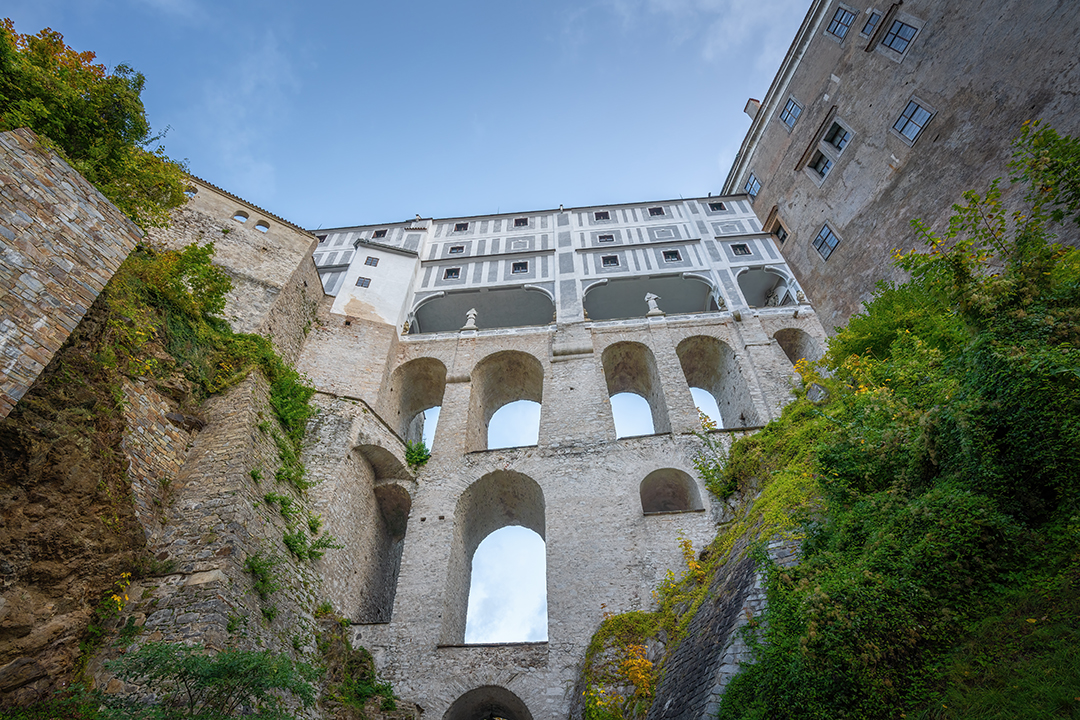
Even if you skip the interiors, it’s well worth walking around the entire castle complex. Walking through the courtyards takes you to the huge Cloak Bridge, a multi-level structure that connects different parts of the castle. From the bridge and the path towards the castle gardens, you get some of the best views of Český Krumlov and can really see just how unusual its layout is. Inside the castle, you can visit the former living quarters of the nobility, but one of the real highlights is the 17th-century Baroque theatre, considered one of the best-preserved in the world. The stage and auditorium are still intact, along with the original costumes and a clever system of wooden machinery once used to change the scenery. Behind the castle is a large Baroque garden, a welcome change from the narrow streets and closely packed buildings of the old town. You can easily spend most of the morning exploring the castle and gardens.
Alongside its museums and galleries, Český Krumlov hosts a number of festivals throughout the year. One of the best known is the Five-Petalled Rose Festival in June, when the town goes back to its Renaissance roots for a few days. You’ll see people dressed in historical costumes all over town, with music, shows and other events inspired by the Rosenberg era.
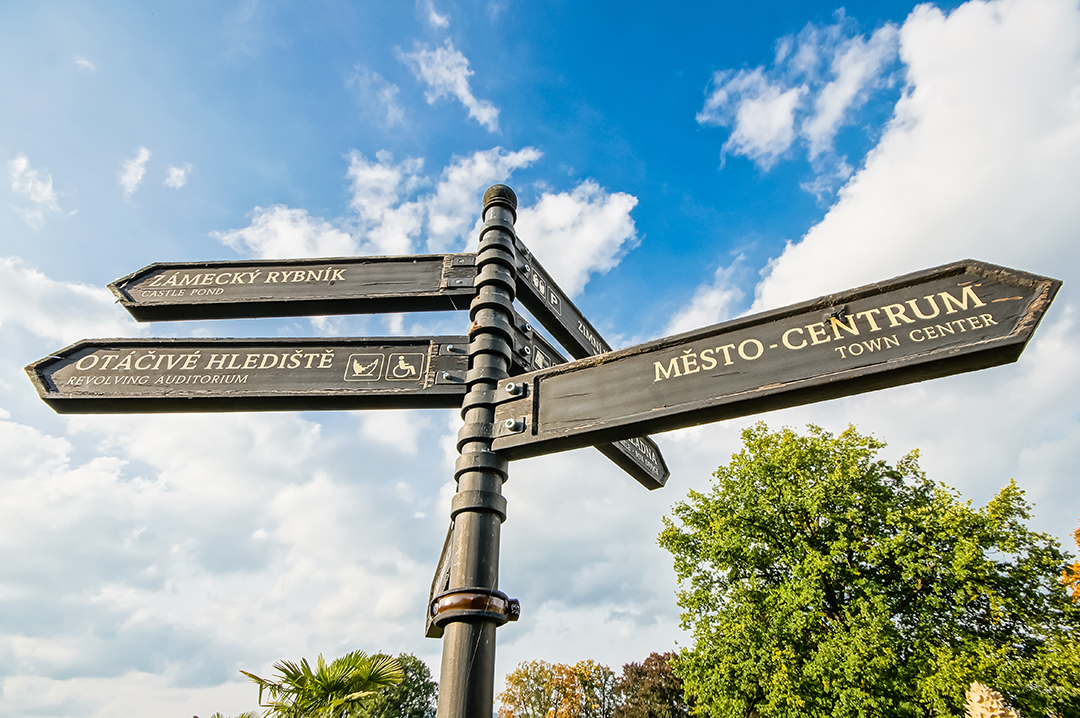
In summer, the castle gardens also become a venue for cultural events, thanks to their famous revolving auditorium. This open-air theatre has a revolving seating area, so the audience turns to face different parts of the natural setting as the performance unfolds.
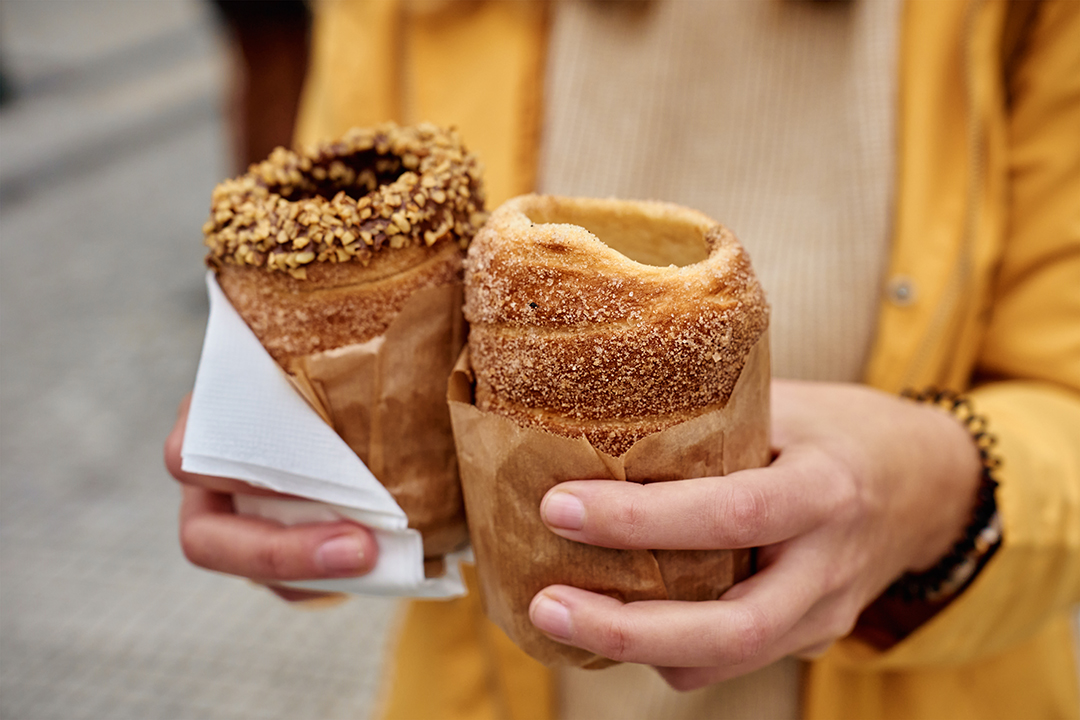
Even without the festival, the nicest part of a visit is often simply sitting by the river. There are lots of restaurants and terraces along the Vltava where you can stop for a Czech beer or a traditional lunch. Menus often include goulash, different meat dishes with dumplings and other Czech classics. In the centre, you won’t have to look far to find the famous trdelník, which is now sold all over the Czech Republic’s tourist hotspots and often presented as a traditional Czech dessert. Its connection to Český Krumlov isn’t nearly as historic as the number of stalls might suggest, but it has still become a familiar part of the town’s tourist scene.
Český Krumlov is small enough to see all the main sights in a day. It’s best to visit the castle in the morning before the crowds arrive, then explore the old town on foot. In the afternoon, you can relax by the Vltava before finishing the day at a museum or simply wandering through the quieter streets.
If you’re staying longer, Český Krumlov is also a great base for exploring more of South Bohemia. About half an hour away are České Budějovice, the largest city in the region and home of Budweiser Budvar beer. Nearby, you’ll also find Hluboká Castle, one of the most recognisable castles in the Czech Republic, with its white neo-Gothic design that looks a little like an English country house.
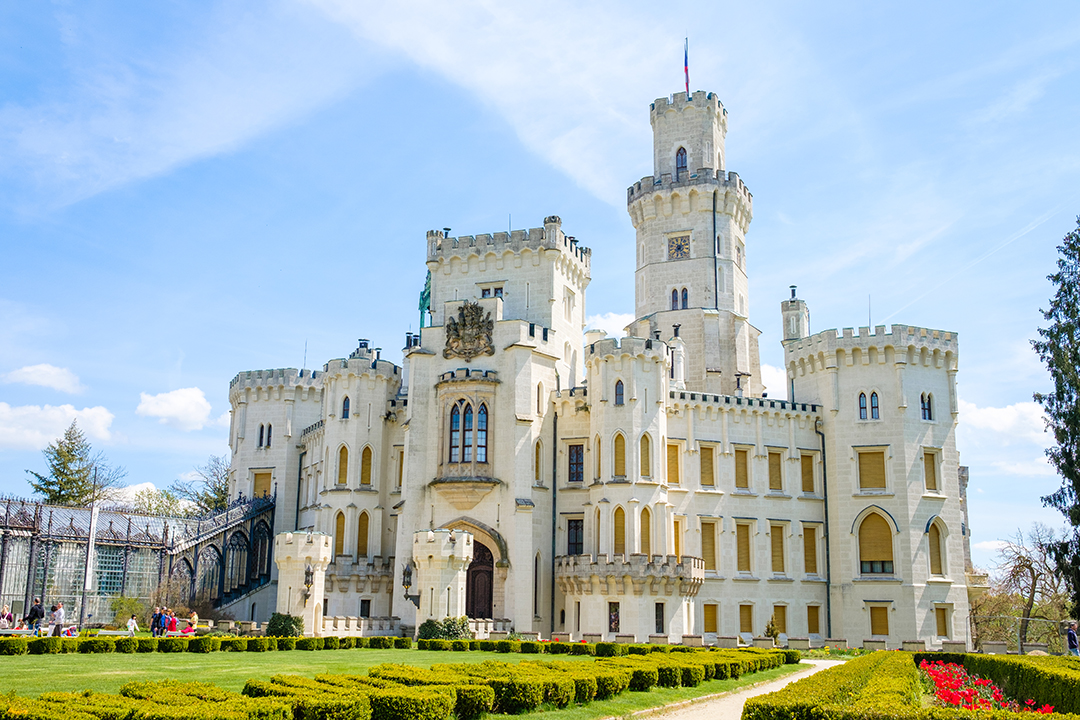
If you prefer nature, head towards Šumava and Lake Lipno, where the historic towns are replaced by forests, hiking trails and all sorts of activities on the water.
Český Krumlov lies in the south of the Czech Republic, around 170 kilometres from Prague and not far from the Austrian border. Its location makes it easy to include on a trip around the Czech Republic or as part of a longer journey through Central Europe. The nearest major city is České Budějovice, about 25 kilometres away, while Linz in Austria is around 70 kilometres from Český Krumlov.
Český Krumlov is easy to reach by car from several directions, but keep in mind that most of the historic centre is closed to regular traffic. There are several large car parks around the old town, all within easy walking distance of the main sights.
Getting there by public transport is fairly straightforward too. Český Krumlov has bus and train connections to several major Czech cities, although buses are often the easiest option from Prague or České Budějovice. The journey from Prague usually takes around three hours, so a day trip is possible, although staying overnight gives you much more time to explore at a relaxed pace.
Český Krumlov is hardly a hidden gem. Photos of the town have appeared in Czech travel guides for years, and in summer, its narrow streets make it very clear just how popular it has become. But the crowds haven’t taken away its charm. Just a few steps from the main streets, you can still find a quiet spot by the Vltava, and in the evening, the castle once again rises above the quieter old town, just as it has for centuries.
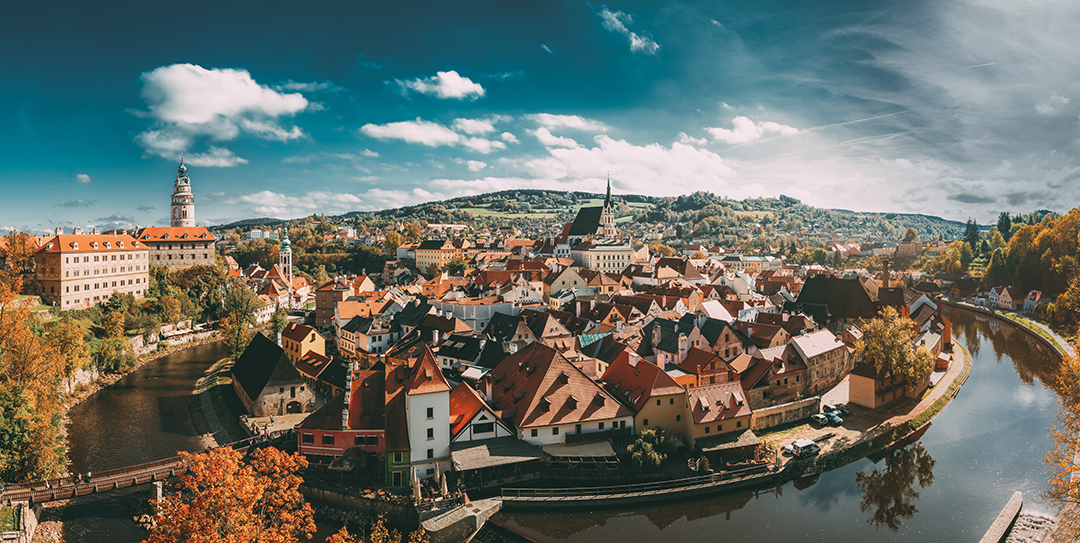
Perhaps that’s what makes Český Krumlov so special. It may not look like much on the map and doesn’t take long to explore, but everything fits together so perfectly that the town somehow feels far bigger than it really is. The castle above the river, the maze of old streets, Renaissance façades and the Vltava wrapped around the historic centre all come together to form one of the best-preserved townscapes in Central Europe. You can walk around Český Krumlov in just a few hours, but it’s one of those places where it’s worth slowing down and taking your time. You can read more about this incredible town and the rest of the Czech Republic in the latest edition of the Lonely Planet guide.

Copyright (©) 2010 - 2026 Youth Hostel | Our Privacy Policy | Cookies | | RPC