In the third part of my article about my three-week trip around Japan, I'll be taking you to Kanazawa, a city in the central prefecture of Ishikawa. The city is best known for one of Japan's most beautiful gardens, its geisha district, and its famous gold-leaf ice cream. Kanazawa is a popular destination among Japanese travellers, and it's also becoming increasingly popular with international visitors. I spent almost three full days in Kanazawa, which is just enough time to see the city's main sights.
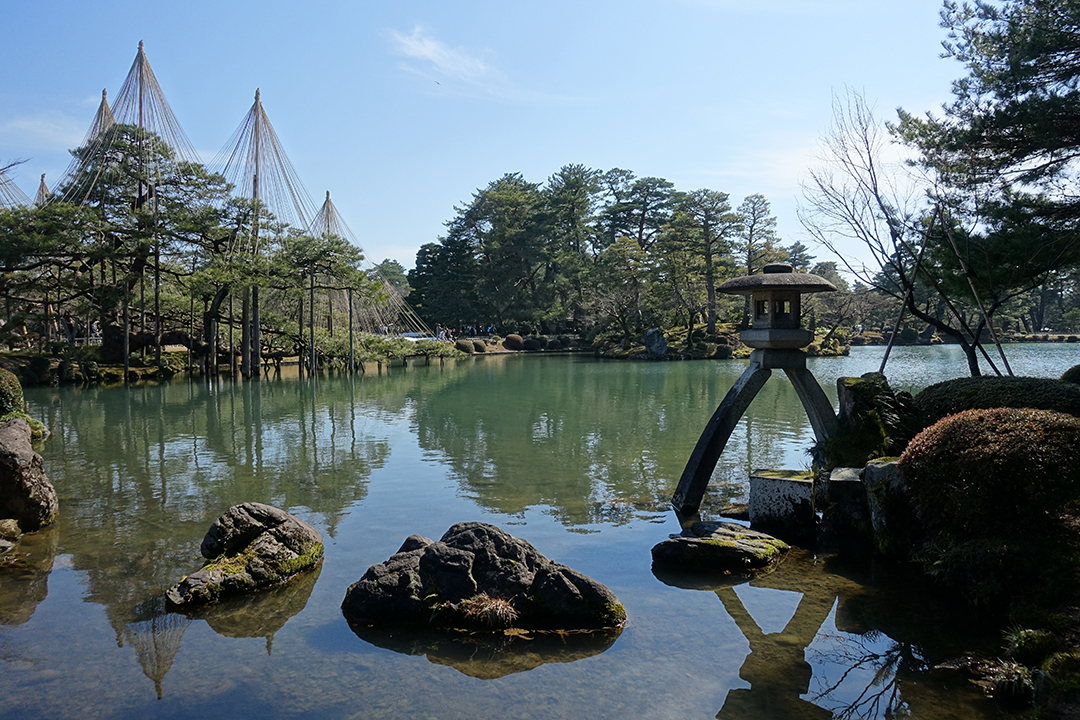
Thanks to its coastal location, Kanazawa is a popular destination for anyone who enjoys good seafood. The most famous spot is Omicho Market, home to the city's largest fish market. There were so many stalls that I had a hard time deciding what to try. In the end, I picked a small stall where the chef was grilling shellfish to order right by the entrance, and it smelled absolutely delicious. I placed my order and paid using a vending machine, then handed the receipt to the chef, who cooked everything right in front of me.
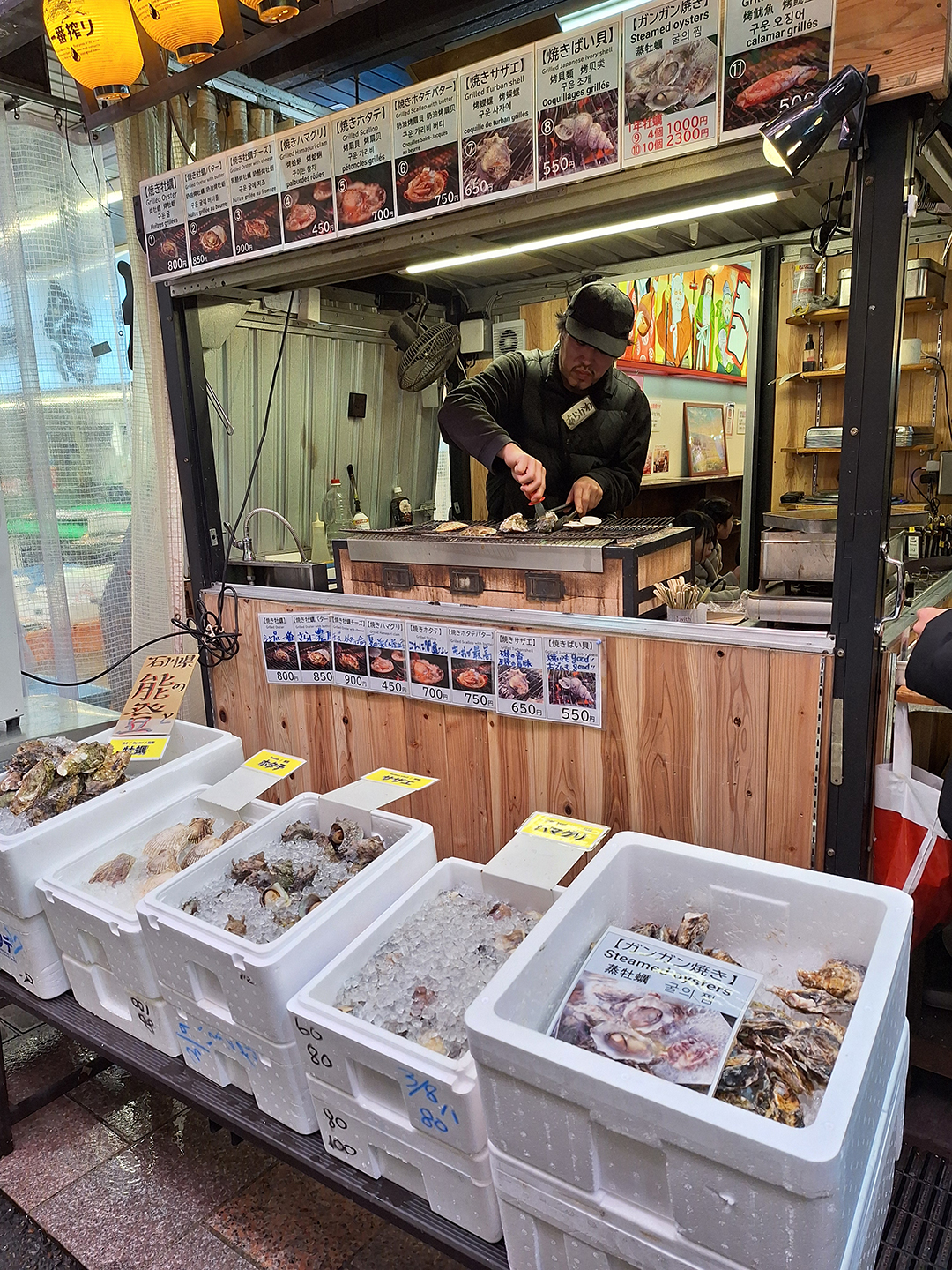
You can also try dishes and desserts topped with gold leaf in Kanazawa. The name Kanazawa is made up of two kanji characters meaning "marsh of gold". Gold is also commonly used in ceramics, and you'll find lots of small pottery shops around the city where you can buy tableware decorated with gold. One of the shops selling gold leaf products also served ice cream. A scoop of this ice cream is, of course, a bit more expensive. I paid around six euros, but you're paying for more than just the ice cream. The experience is part of it too, as it is decorated with gold leaf right in front of you using a special technique.
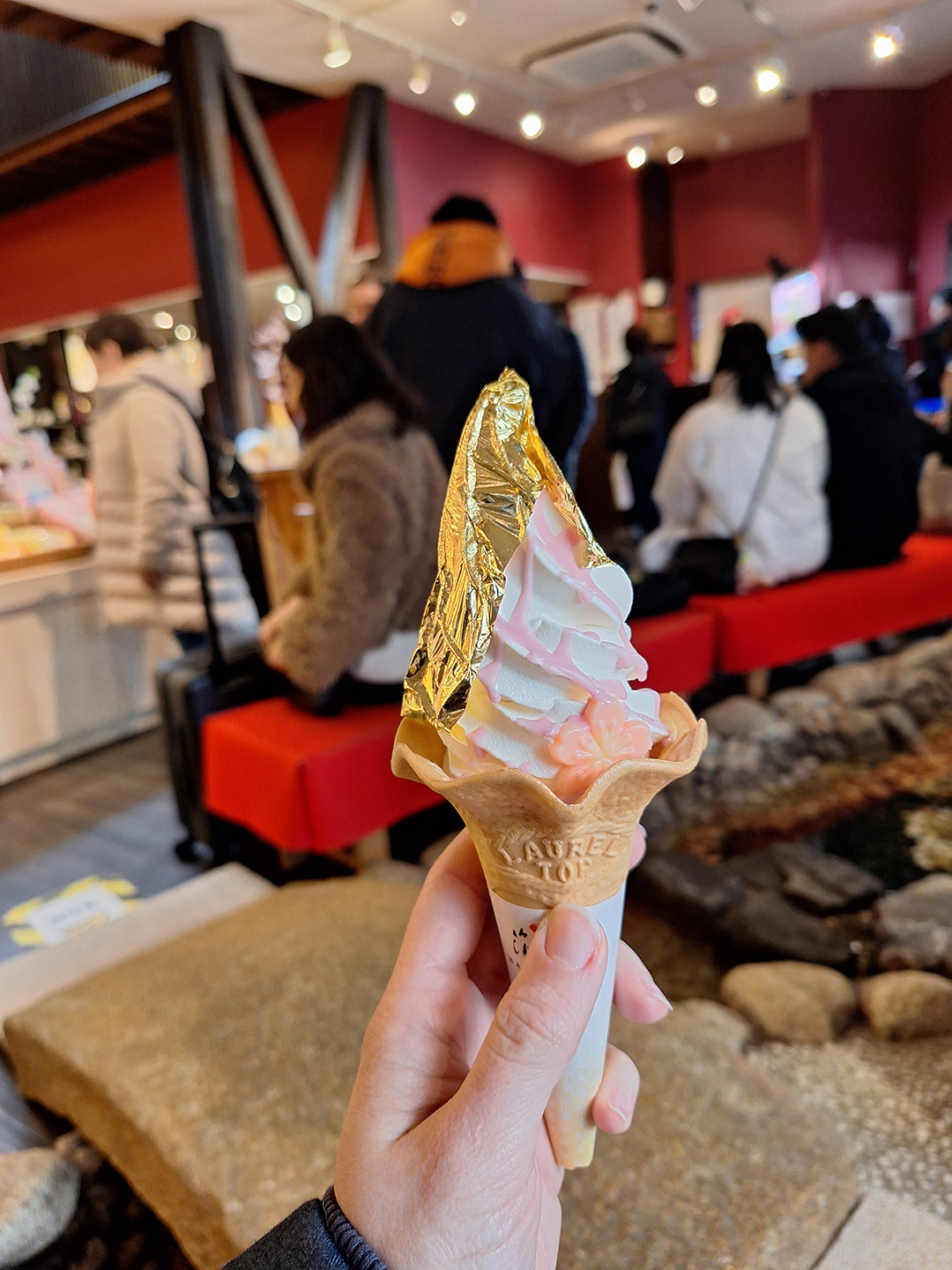
After visiting the market, I headed to the city's famous geisha district. A geisha, or geiko as they are known in Kanazawa, is a traditional Japanese entertainer who spends her entire life training in dance, music, singing, and the art of hospitality. Their role is to entertain at private gatherings, spend time with wealthy clients, and also regularly perform at festivals and other events.
Their training takes many years and is highly demanding. Before travelling to Japan, I read the book Geisha, a Life by Mineko Iwasaki, one of the most famous geiko of her generation. It's one of the books I'd recommend to anyone planning a trip to Japan, as geisha are such an important part of Japanese culture.
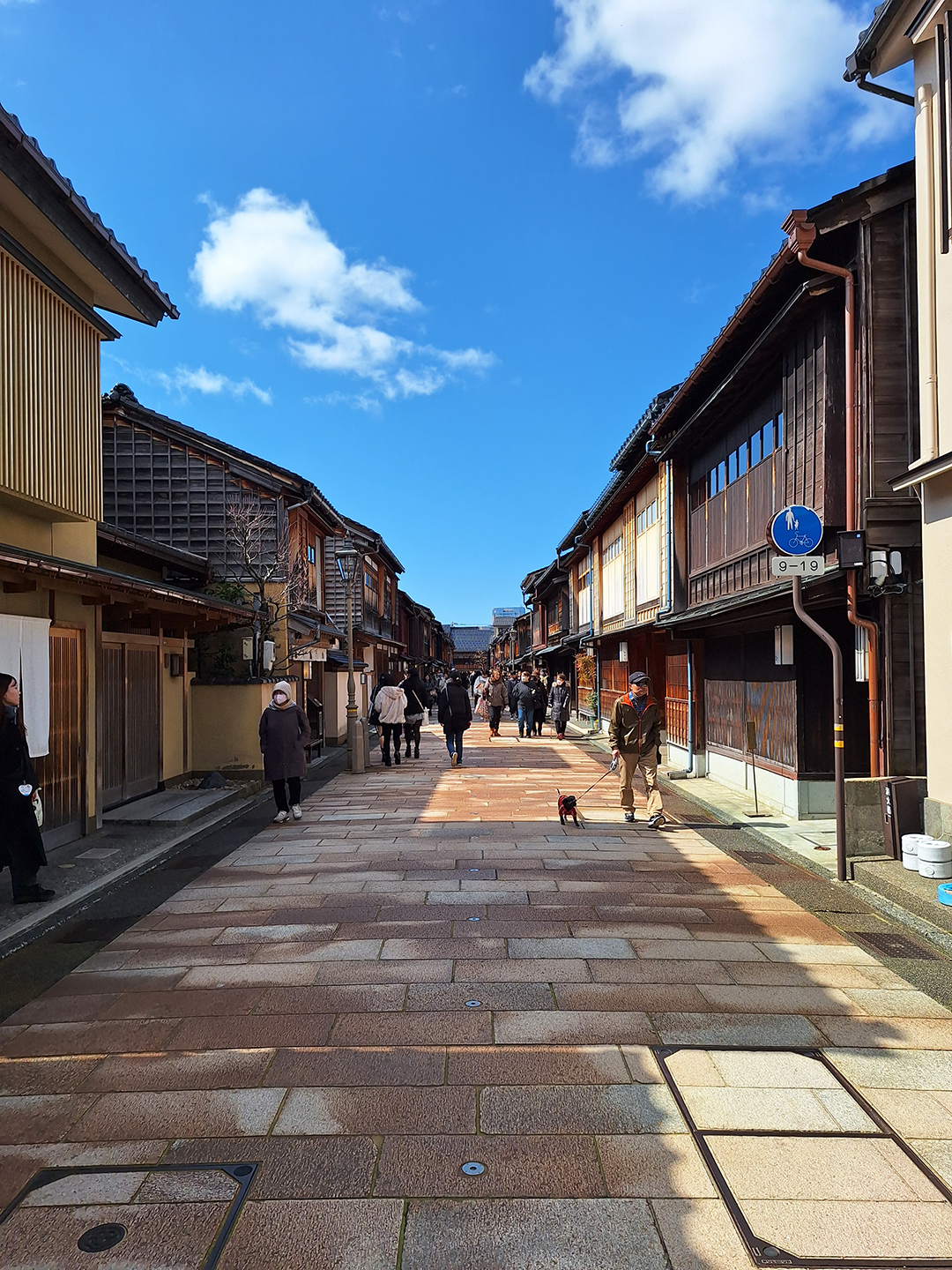
Geishas still work today, but meeting one is a very expensive experience, so most tourists simply hope to catch a glimpse of one on the street as she makes her way to or from work. While exploring the geisha district, I also came across the small Kanazawa Asanogawa Enyukai Hall museum completely by chance. Kanazawa has two famous geisha districts where you might spot a geiko: Nishi Chaya and Higashi Chaya.
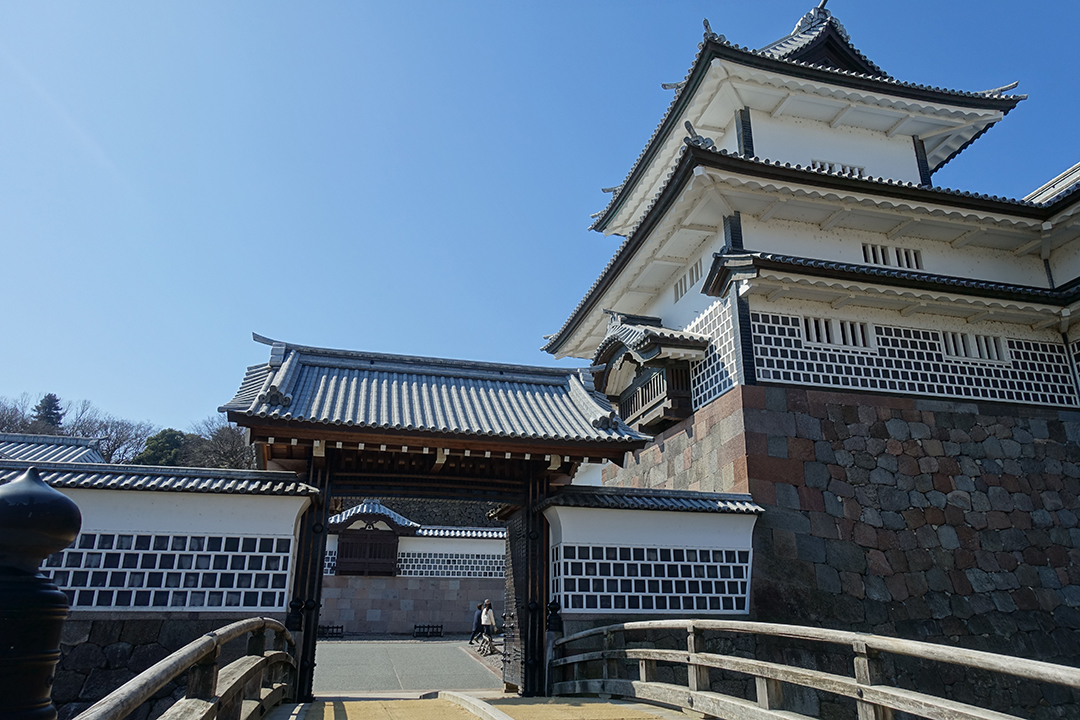
After breakfast, I made my way to the other side of Kanazawa. I started with the castle, or at least the part that was open. Following the magnitude 7.6 earthquake in 2024, parts of the castle were still closed for restoration when I visited in March 2025.
The castle has been destroyed by fire several times throughout its history, but they have patiently been restoring it since 1990. The castle grounds are surrounded by stone walls and include several buildings as well as beautifully landscaped gardens. In Japan, it's customary to take your shoes off before entering indoor spaces. Sometimes you're given slippers to wear instead, but that's not always the case.
If you're travelling during the colder months, it's worth wearing slightly thicker socks, preferably without any holes, as many of the older buildings don't have underfloor heating. Even though I was walking on tatami mats, the traditional flooring found in Japanese rooms, my feet often got cold.
One of the cultural experiences you can try as a tourist is taking part in a traditional tea ceremony. I decided to book a tea ceremony at the small private garden Gyokusen-en Nishida. This small Japanese garden, built in the 17th century, is owned by the Nishida family, who have been holding traditional matcha tea ceremonies for visitors since 1971. You'll need to book in advance, and the tea ceremony is held in English in a small group.
Our host, Ms Nishida, who is a trained tea master, guided us through the entire ceremony. During the experience, I learned a lot about the history and etiquette of the tea ceremony, and I got to try matcha for the first time. It's a green tea with a slightly bitter taste that is popular with both locals and tourists. Alongside the tea, we were served a selection of traditional Japanese sweets, including mochi, a small rice cake filled with sweet red bean paste.
One thing that has stayed with me is the Japanese phrase "ichi-go ichi-e", which our host introduced at the beginning of the ceremony. It reminds us to appreciate every moment we share with others, as every meeting is unique and can never be repeated. Maybe that's one of the reasons I love travelling so much, because every trip brings new people, new experiences, and lasting memories.

Copyright (©) 2010 - 2026 Youth Hostel | Our Privacy Policy | Cookies | | RPC