Kyoto is Japan’s former capital and one of the country’s busiest tourist destinations. It is known for its many temples, cultural heritage, bamboo forest and sacred mountain. I set aside four days to explore Kyoto, but they went by so quickly that there are still many things left to see for my next visit. In this article, I’ll share what parts of Kyoto I visited, along with a few tips for exploring the city.
On my first day, I got up early and headed to Nijō Castle. The advice I heard most often about Kyoto was to visit the main sights early in the morning or late in the evening, when they’re less crowded. Even though the castle hadn't opened yet, I was already queuing for a ticket.
The castle was built in 1603 under Tokugawa Ieyasu, the first shogun of the Tokugawa shogunate. Shogun was the title given to Japan’s military rulers, who held power in the country between 1185 and 1868. The castle was a symbol of the shogun’s power and authority. Nijo-jo has been listed as a UNESCO World Heritage Site since 1994 and attracts millions of visitors each year. The castle is divided into three areas: Honmaru, the main defensive enclosure, Ninomaru, the second defensive enclosure, and the gardens between them. Ninomaru Palace is beautiful inside, with intricate paintings and rooms full of ornate details. You have to take your shoes off before entering the palace, so warm socks are a must if you’re visiting Japan during the colder months.
After the castle, I also visited the Kyoto International Manga Museum, which is about a 15-minute walk away. Manga are popular Japanese comics read by people of all ages around the world. They come in a wide range of genres, including fantasy, romance and stories for adults, as well as many different art styles. The museum has thousands of manga, organised by year of publication and language. You can pick one off the shelf and read it on one of the chairs and sofas throughout the museum. The museum also puts on events such as kamishibai, a form of storytelling that uses illustrated cards displayed on a small wooden stage. The show is suitable for both children and adults but is performed in Japanese.
Most tourists visit Arashiyama, which is famous for its large bamboo forest and monkey park. Arashiyama is a district just west of Kyoto and is one of the busiest tourist areas in the city.
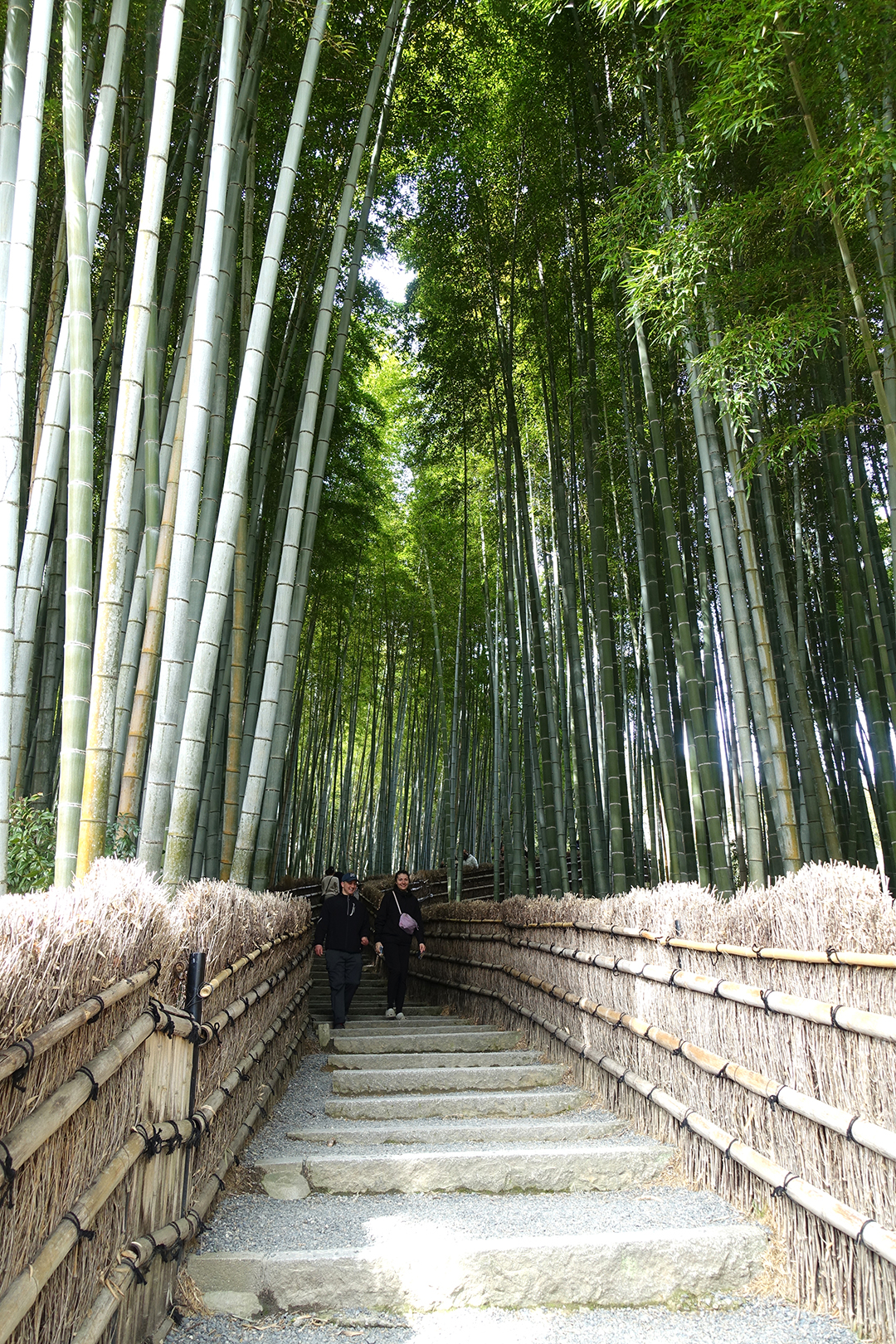
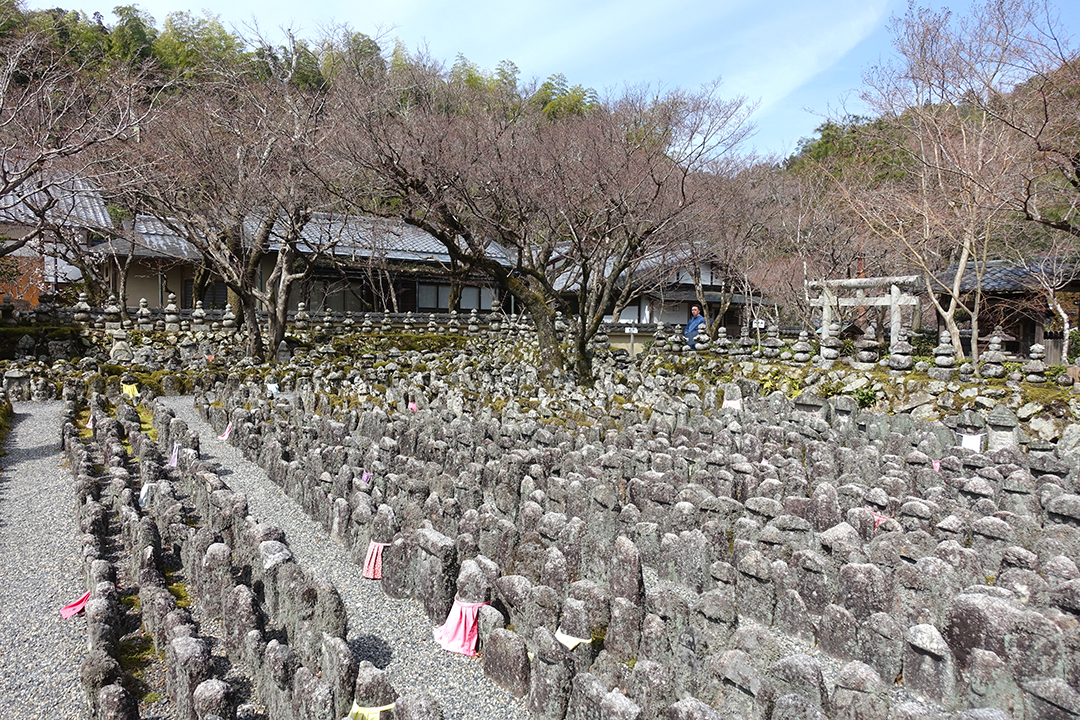
I wanted to visit a bamboo forest, so after a bit of research and some tips from social media, I came across Otagi Nenbutsu-ji Temple, which also has a smaller grove nearby. The temple isn’t far from the famous bamboo forest and is also easy to reach by public transport.
This Buddhist temple is known for its 1,200 small stone statues of rakan, each one different from the next. With their thick covering of moss, the statues look much older than they really are. In fact, different artists carved them in the 1980s and 1990s, which is why each one has its own expression and character. You can even spot one holding a tennis racket or another listening to music on a Walkman.
Fushimi Inari is one of the most famous Shinto shrines in Japan. You’ll find it in the Fushimi district, just southeast of central Kyoto, where it welcomes more than ten million visitors a year. It is dedicated to Inari, the god of rice. The complex is made up of thousands of torii gates, around 10,000 by some estimates, as well as smaller shrines scattered across the sacred Mount Inari. Along the way, you’ll see fox statues, which are believed to be Inari’s messengers in Shinto and carry messages between humans and the gods.
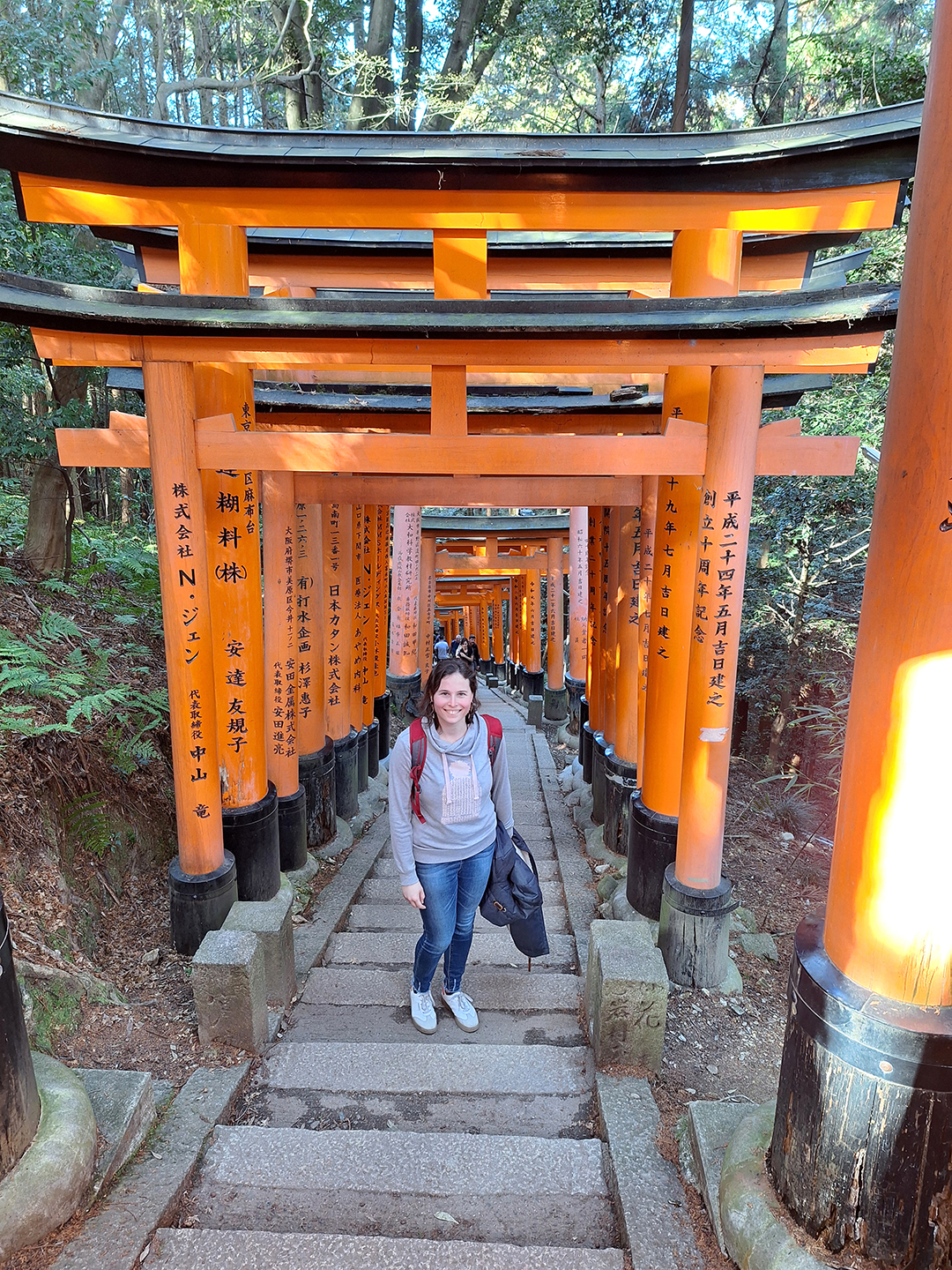
Many people recommend visiting very early in the morning or late in the evening, as the shrine is open around the clock. There are so many sights in Kyoto that are best visited early that I was running out of mornings.
I visited Fushimi Inari after lunch and, unsurprisingly, found myself surrounded by crowds of tourists. Most people only walk the first part of the trail, take a few photos and then head back into the city. I decided to do the longer four-kilometre loop, which takes around two to three hours when it’s busy. I’d recommend doing the full route, as you’ll have a much better chance of getting photos without other people in the background.
I spent my last day in Kyoto with a volunteer guide called Kazumori-san, or Kazu for short. Just like in Tokyo, Kyoto has a volunteer organisation where you can request a local guide. The arrangements are the same as in Tokyo, and you can find more information in the first part of my trip around Japan.
Despite the cold and rainy weather, we managed to fit four different temples, Nishiki Market and the famous geisha street of Hanamikoji into one day.
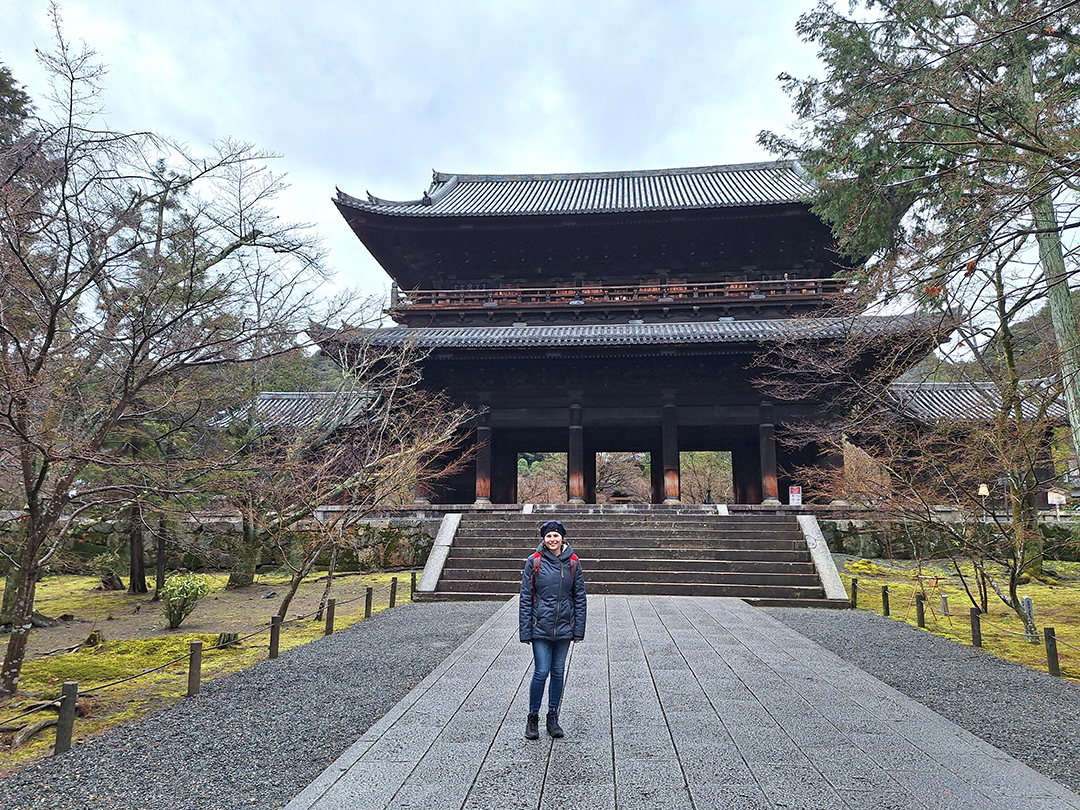
We started with Nanzen-ji, one of Kyoto’s best-known Zen temples. The first thing you pass is the impressive Sanmon Gate, which leads you towards the Hōjō part of the temple. This part is known for its rock garden, where the stones are said to resemble a tigress with her cubs, although you might need a little imagination to see it. Every morning, one of the monks draws wave patterns in the sand, which are gradually washed or blown away by the weather. Next to the temple is an aqueduct built during the Meiji period (1868–1912), which still carries water from Lake Biwa to Kyoto today.
Next, we visited Yasaka Shrine, best known for the Gion Matsuri festival held every July. The shrine has a main hall that combines the honden, or inner sanctuary, with the haiden, where offerings are made. There is also a dance stage decorated with hundreds of lanterns that are lit every evening. Each lantern bears the name of a local business that made a donation to the shrine.
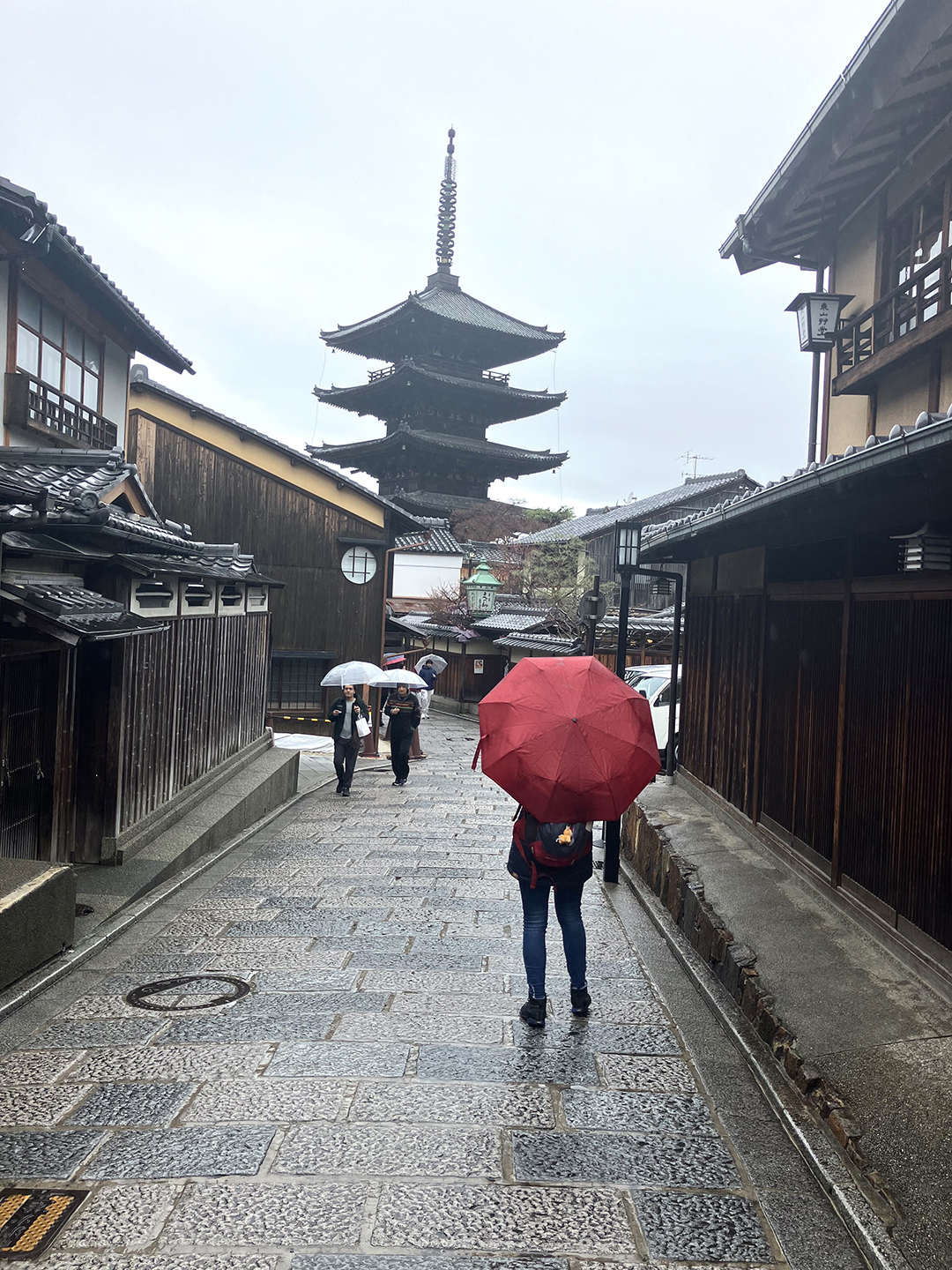
On the way to our next stop, we made a quick visit to Yasaka Kōshin-dō, a shrine that many people know as the Monkey Temple. It’s dedicated to the three wise monkeys, known as Sanzaru, who represent the saying ‘see no evil, hear no evil, speak no evil’. Visitors write their wishes on colourful fabric charms called kukurizaru, in the hope they’ll come true.
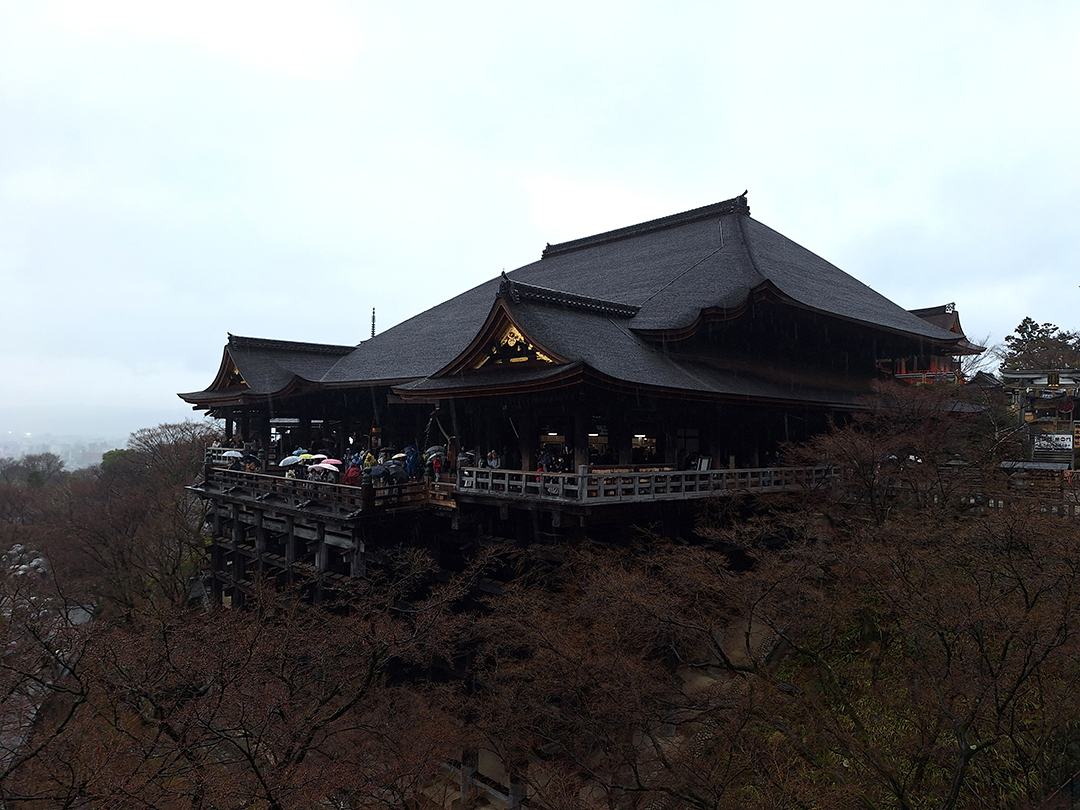
We continued along Sannenzaka, one of Kyoto’s prettiest streets, until we reached Kiyomizu-dera, whose name means ‘Pure Water Temple’. It was built around 780 and is listed as a UNESCO World Heritage Site. As well as its rich history, it’s also popular for its beautiful views over Kyoto.
Our final stop was Kōdai-ji Temple. After the death of warlord Toyotomi Hideyoshi, his wife Nene had the temple built in his memory. The temple has several different areas, and every spring and autumn there’s a special light and music show, so the best time to visit is in the evening.
I have such fond memories of Kyoto and would love to go back one day. In the next part, I’ll share a few ideas for day trips from Kyoto.

Copyright (©) 2010 - 2026 Youth Hostel | Our Privacy Policy | Cookies | | RPC