Apulia is one of Italy's 20 regions that lies between the Adriatic and Ionian seas in the country's far southeast. As countless archaeological discoveries have shown, the region was already densely populated in prehistoric times. In the 3rd century BC, the Romans conquered Apulia, and it soon grew into one of the most important trading ports in the eastern Mediterranean. After the fall of the Western Roman Empire, various powers fought for control of Apulia until the 19th century, when it became part of the Kingdom of Italy.
The region is famous for its long sandy beaches, with more than 800 kilometres of coastline, and for being one of the world's largest producers of olive oil. Apulia charms visitors with its rich cultural heritage, picturesque seaside towns and crystal-clear waters. The local food is reason enough to visit. Apulia's best-known specialities include orecchiette pasta, fresh seafood, octopus, focaccia, burrata, exceptional olive oil and excellent local wines.
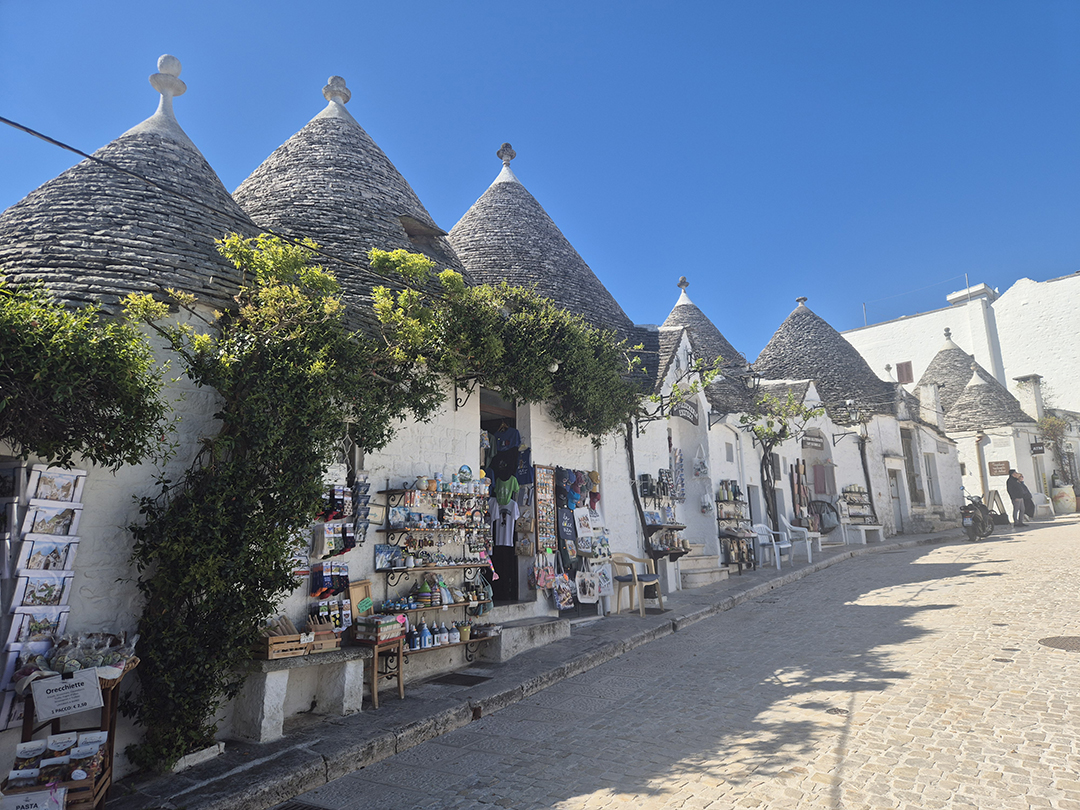
Alberobello is world famous for its trulli, traditional stone houses with distinctive conical roofs. Their unique architecture earned Alberobello's historic centre a place on the UNESCO World Heritage List in 1996. The area was already settled in the Middle Ages, but Alberobello only began to grow into a town in the 15th century. At the time, the local feudal lords encouraged people to build houses without mortar because they could be dismantled quickly. This allowed them to avoid the taxes the Kingdom of Naples imposed on newly established permanent settlements. The houses were built from limestone stacked without mortar, and their roofs kept them cool in the summer heat while providing shelter from the rain. Today, these houses have become a symbol of Apulia, and more than a thousand of them can be found in the Rione Monti district alone. Trullo Sovrano is the largest of them all and the only two-storey trullo. Today, it serves as a museum and offers a glimpse into what life in Alberobello was once like.
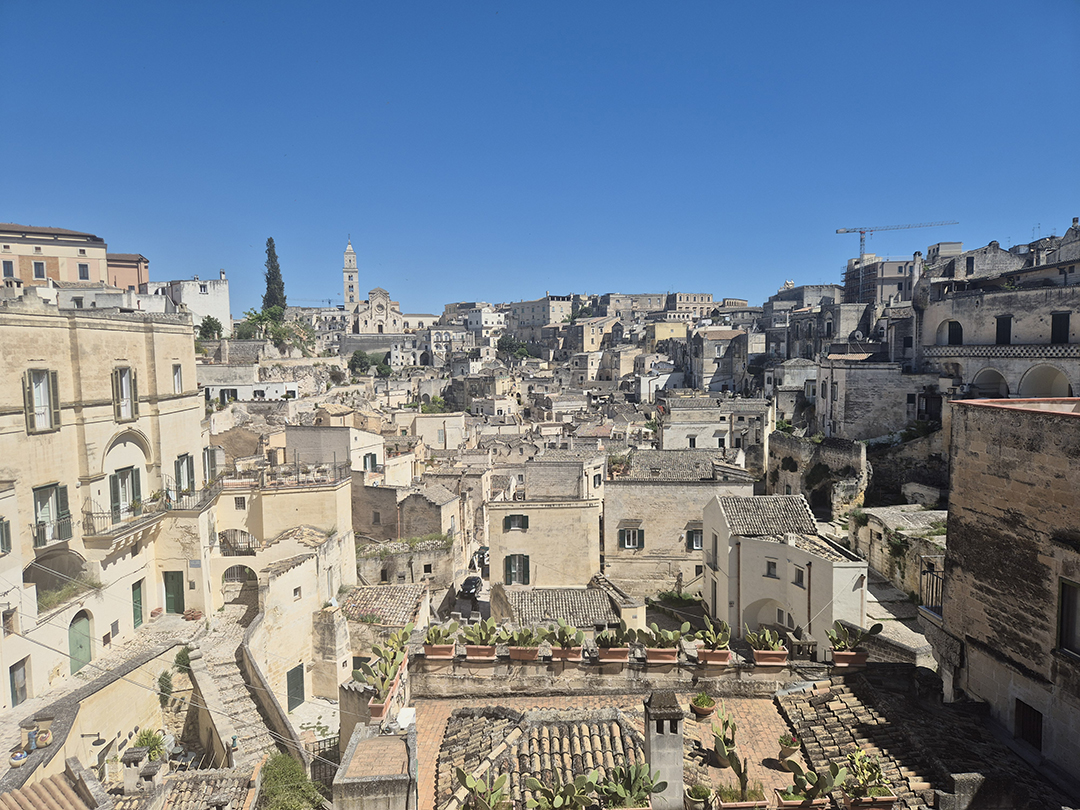
The area around Matera is thought to have been inhabited for more than 9,000 years, which makes it one of the oldest continuously inhabited cities in the world. The first inhabitants made their homes in natural caves, which they gradually expanded and transformed into homes, churches, monasteries and storehouses over the centuries. During the Middle Ages, the town flourished. More churches were carved into the rock, and an extensive rainwater collection system supplied the town with water all year round. By the 20th century, living conditions in the caves had become extremely difficult, so the Italian government relocated the residents to newly built parts of the town. The old town was left abandoned for decades before it was brought back to life. Today, Matera is regarded as one of Europe's best-preserved historic cities, and its historic centre was added to the UNESCO World Heritage List in 1993.
Bari is the capital of Apulia and, with a population of more than 300,000, the region's largest city. It is also one of Italy's most important port cities. At the heart of the city lies Bari Vecchia, the old town, with its narrow stone streets, bustling squares and historic buildings. The city's most famous landmark is the Basilica of Saint Nicholas, which houses the relics of Saint Nicholas, the patron saint of sailors and children. The city centre is also home to the Cathedral of Saint Sabinus, a Romanesque church built on the remains of an earlier Byzantine church. The Norman Swabian Castle is an impressive medieval fortress built by the Normans in the 12th century, while the Petruzzelli Theatre is Italy's fourth largest opera house and hosts a regular programme of opera, ballet and concerts. Stretching along Bari's seafront, the Lungomare promenade is a favourite spot for an evening stroll or simply watching the sun go down.

With its wealth of ornate churches, grand palaces and elegant Baroque squares, Lecce is often called the Florence of the South. Lecce has a history stretching back more than 2,000 years and was already an important settlement in ancient times. During the Roman Empire, Lecce became an important trading and administrative centre. The Roman amphitheatre, theatre and parts of the city walls have all survived to this day. The city reached its golden age in the 17th century, when it became the cultural heart of southern Italy. It was during this period that many of the city's churches, palaces and monasteries were built from the local Lecce stone, a soft limestone that is easy to carve and gives the buildings their distinctive golden glow. At the heart of the old town is Piazza del Duomo, home to the Cathedral of the Assumption of the Virgin Mary. You enter the old town through the Porta Napoli triumphal arch and from there, you'll come across sights such as Charles V Castle and the Basilica of Santa Croce, which is widely considered the finest example of Lecce's Baroque architecture.
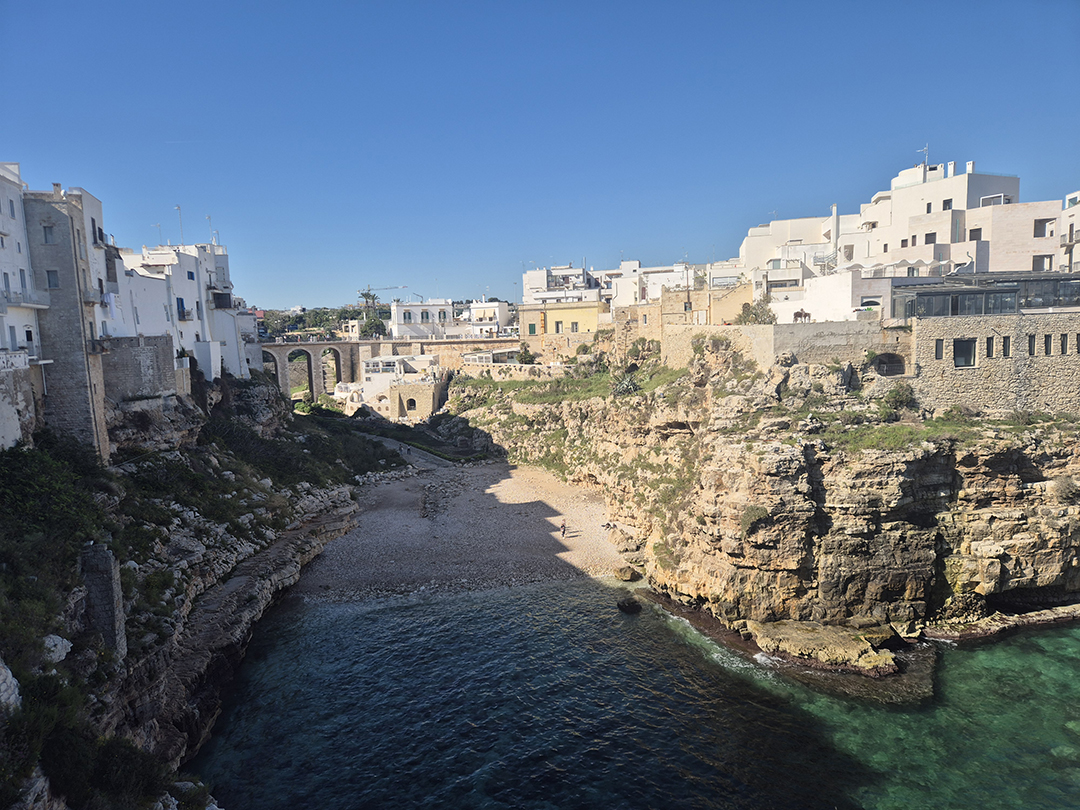
Polignano a Mare is a charming seaside town about 35 kilometres south of Bari. The town has a history that stretches back to ancient times, but today it is best-known for its dramatic setting on limestone cliffs overlooking the Adriatic Sea. The old town is full of whitewashed houses, narrow stone streets and stunning views across the crystal-clear turquoise sea. Polignano's best-known spot is Lama Monachile, a tiny pebble beach tucked between towering cliffs that create a spectacular setting. The coastline is also dotted with sea caves, which you can explore by boat or kayak. Along the seafront stands a statue of the Italian singer Domenico Modugno with his arms outstretched. Born in Polignano, he found worldwide fame with his song Volare (Nel blu dipinto di blu).
By the end of the trip, it’s easy to feel a genuine connection to Apulia. Life moves at a slower pace here, and there’s something special even in the simplest everyday moments. The memories of beautiful places, warm locals, wonderful food and unforgettable experiences stay with you long after you've left. You fall in love with Apulia almost instantly. Its authentic charm keeps drawing you back to explore more of its hidden corners, and there always seems to be another one waiting to be discovered.

Copyright (©) 2010 - 2026 Youth Hostel | Our Privacy Policy | Cookies | | RPC