My sojourn through Tibet has once more underscored the verity that artificial intelligence remains fundamentally incapable of supplanting travel journalists. Whilst it selects its vocabulary with meticulous, nigh-poetic precision, it cannot replicate genuine human encounters or the lived travel experience. The algorithmic depiction read thus: "Tibet, a realm perched upon the roof of the world, sprawls as a boundless plateau amidst the most towering peaks of our planet. Its vast expanses transcend the mere geographical concept of space; they constitute an experience perceived by the traveller’s entire being. Where the ether is rarefied yet the firmament an infinite azure, the world unfolds into a silence simultaneously magnificent and fragile." To top it all off, I was queried as to whether I desired a poetic denouement, whereupon I received a brief stanza culminating in the words: "In these highlands, one does not seek a path forward—one seeks a path inward." All well and good, and undeniably more lyrical than any prose I might have penned myself, yet ultimately it remains mere grandiloquence devoid of substantive essence.
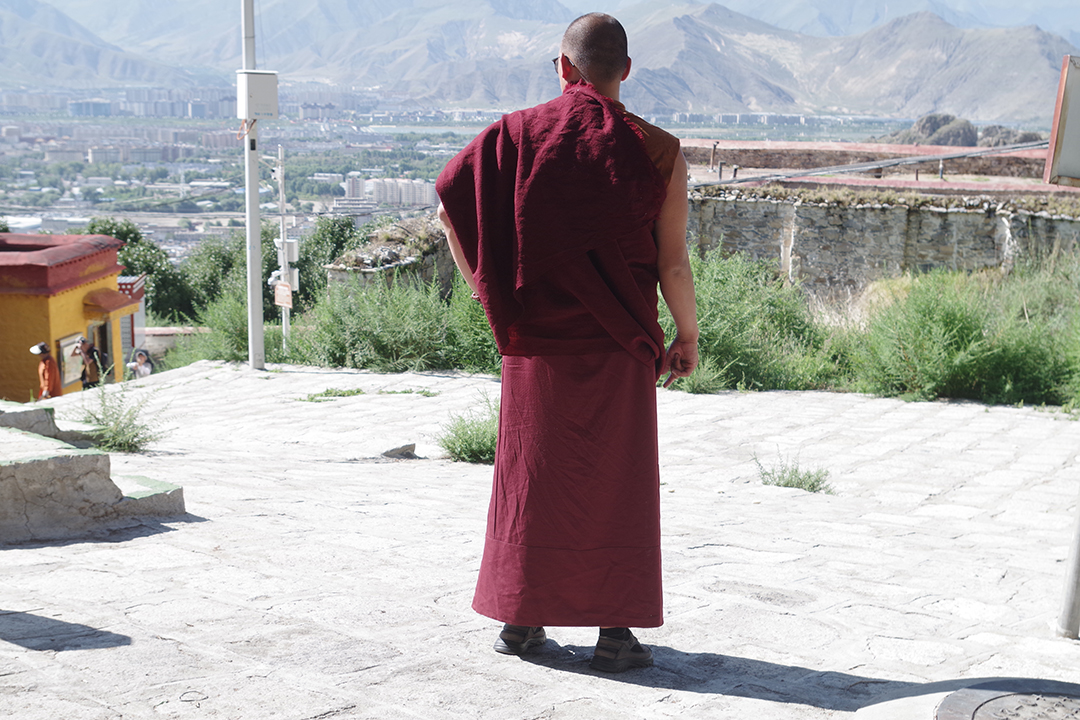
Naturally, I harbour no illusions of possessing an understanding of Tibet as profound as that of Heinrich Harrer, who spent seven years there and served as the inspiration for the cinematic piece Seven Years in Tibet—directed by Jean-Jacques Annaud and starring Brad Pitt. Nevertheless, I garnered insights sufficient to compile the itinerary and travelogue that follows.
Tibet, or Xizang, is officially an integral part of China, yet, conversely to 'ordinary' provinces, it enjoys a modicum of greater autonomy regarding the preservation of its culture, language, and local customs. This encompasses the prerogative to utilise its own language and script in official matters, the capacity to maintain and foster traditional culture and religion, and specific jurisdictions over the local economy and education.
It is precisely due to this cultural preservation that visiting Tibet is somewhat convoluted; travel is permissible solely under the auspices of a registered Tibetan travel agency, which guarantees, amongst other stipulations, that visitors will respect Tibetan culture and conventions. However, as members of Hostelling International, you may orchestrate your journey with the assistance of the Youth Hostel in Lhasa. They operate their own agency, which manages all necessary arrangements at more favourable, backpacker-friendly rates.
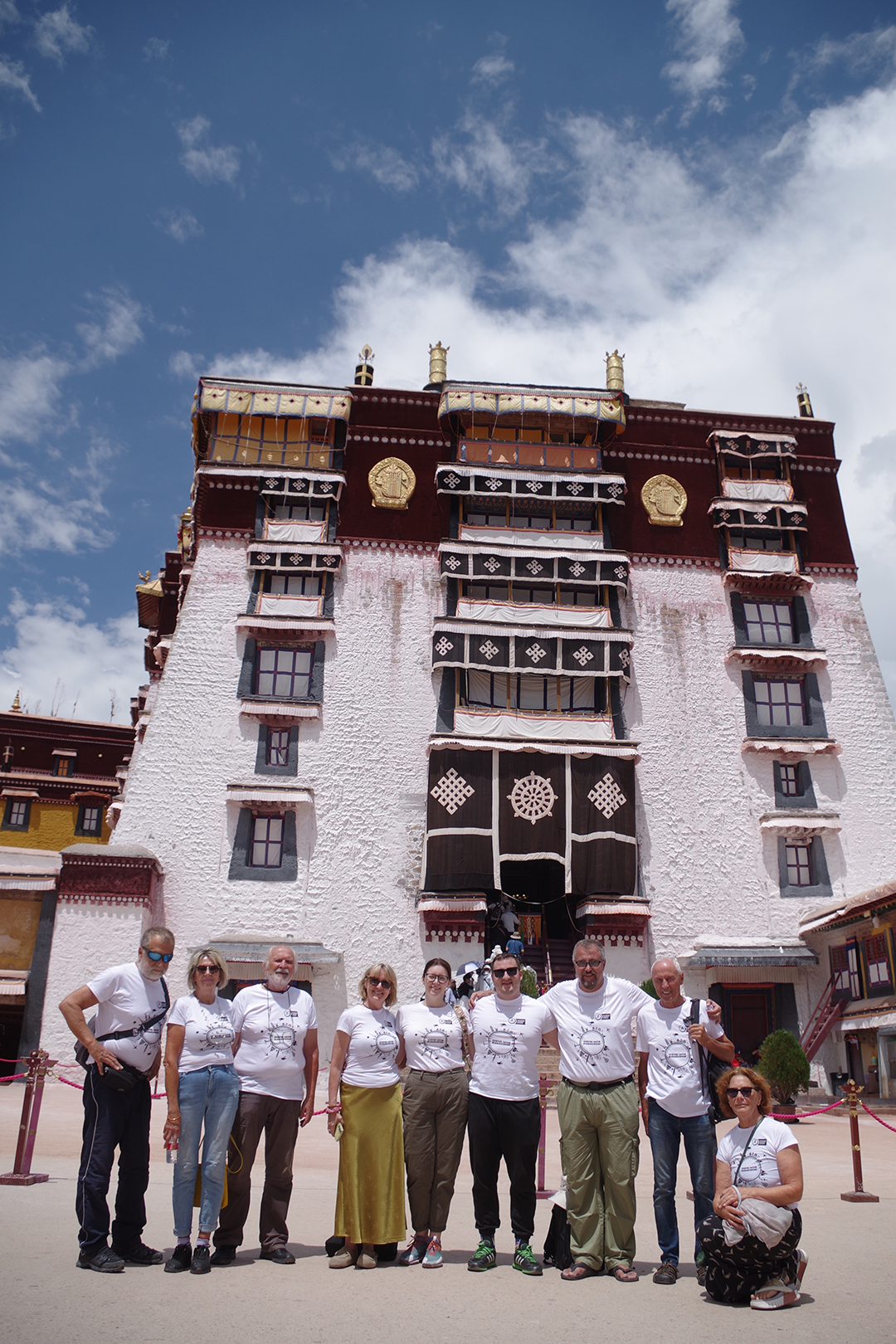
The elevation of Lhasa stands at 3,650 metres, yet this is merely the threshold, as it represented the nadir of our expedition. Consequently, acute mountain sickness (AMS) is the primary apprehension for many, which is why I shall address it at the very outset.
Altitude sickness is inherently unpredictable and bears no direct correlation to an individual’s physical fitness, age or general health. For this reason, I initially recommend prophylactic measures, which predominantly entail copious hydration, total abstinence from alcohol during the initial days, and pharmaceutical intervention that quite effectively thwarts the onset of AMS. Given the multiplicity of manufacturers, it is prudent to remember the primary active ingredient—Acetazolamide—though one should invariably consult a medical professional beforehand.
The most ubiquitous affliction, distinct from actual altitude sickness, is rapid breathlessness or fatigue, given that the atmosphere is considerably thinner and contains far less oxygen than that to which we are accustomed. Yet even this oxygen deficit is mitigated by portable oxygen canisters, which cost marginally above one euro, whilst numerous establishments offer supplementary in-room oxygen enrichment.
Having concluded the prefatory remarks, let us proceed directly to the indispensable landmarks, commencing with the most renowned monument, the Potala Palace.
The Potala Palace is indisputably the most frequently photographed landmark in Tibet, and with good reason. It is a monumental edifice steeped in an exceptionally rich history, to which one could, without hyperbole, dedicate an entire volume; however, this account will confine itself to a few salient highlights.
Perched upon the Marpo Ri hill in Lhasa, the capital of Tibet, the palace rises approximately 130 metres above the cityscape. Its origins trace back to the 7th century, when the Tibetan monarch Songtsen Gampo (circa 617–650) erected the inaugural fortress upon this site. The nomenclature 'Potala' derives from the Sanskrit term Potalaka, the mythical mountain abode of the Bodhisattva of compassion, Avalokiteshvara—a figure whom the Tibetans associate with the lineage of the Dalai Lamas.
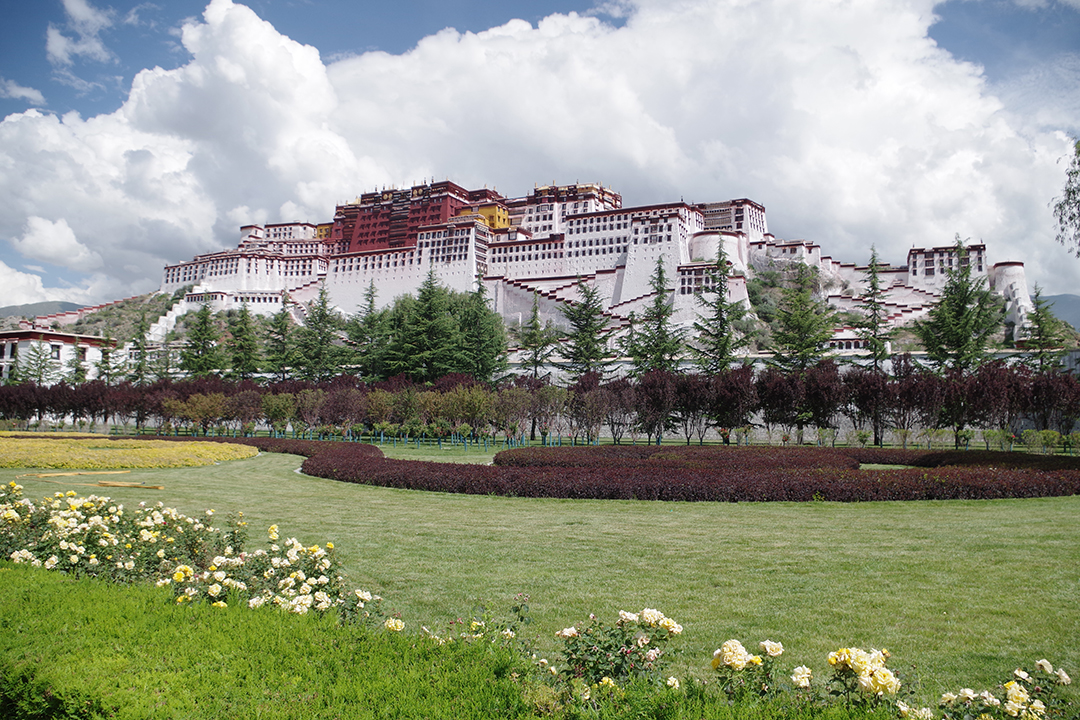
The contemporary architectural manifestation of the Potala Palace materialised in the 17th century, when the Fifth Dalai Lama, Ngawang Lobsang Gyatso (1617–1682), relocated his political and religious seat to Lhasa. In 1645, he commissioned the construction of a new palace designed to serve simultaneously as the seat of the Tibetan government, the residence of the Dalai Lama, a monastic complex, and the pre-eminent symbol of both spiritual and temporal authority.
UNESCO inscribed the Potala Palace onto the World Heritage list in 1994, later extending this protection to encompass the contiguous Jokhang Temple and the Norbulingka, the summer residence of the Dalai Lamas. Crucially, the fact that it is situated 130 metres above the city ensures that you will certainly not be escorted there on your inaugural day; the ascent comprises over 300 steps, rendering a two-day period of acclimatisation highly desirable.
These constitute the conventional monastic institutions incorporated into standard itineraries, and our journey proved no exception. Although all temples and monasteries feature broadly analogous main sanctuaries—typically dominated by a colossal effigy of the Buddha—each possesses a distinct idiosyncrasy that differentiates it from its peers and validates a visit.
Should one desire to visit every monastery, or at least the majority thereof across Tibet, it would require over a year, as more than two hundred are open to visitors in Lhasa and its environs alone. Whilst each of these two hundred sanctuaries merits a detailed exposition, I shall confine my commentary to the triad we actually visited.
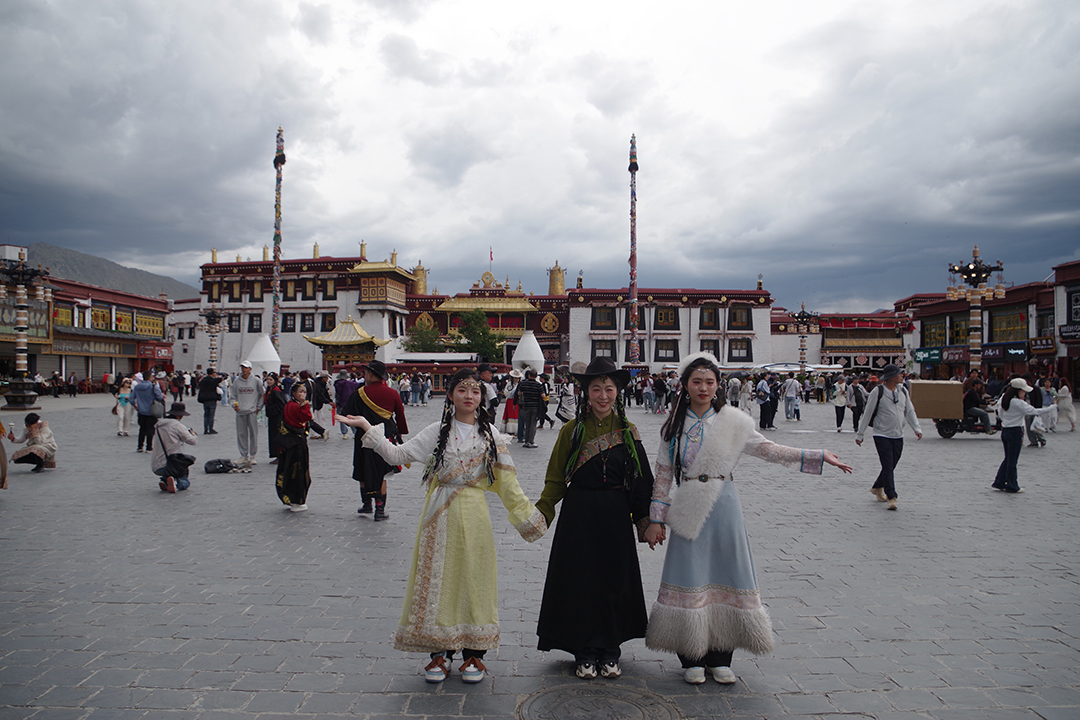
Drepung Monastery was established in 1416 by Jamyang Chöje Tashi Palden, a disciple of the eminent reformer Tsongkhapa and founder of the Gelug (Yellow Hat) school of Tibetan Buddhism. By the 17th century, its walls housed over 10,000 monks. Prior to the construction—or rather, the reconstruction—of the Potala Palace, it also served as the residence for several Dalai Lamas.
The monastery was structured as a university comprising four principal colleges:
Life in Drepung was rigorous, yet saturated with erudition, communal prayers, and debates that sharpened mental acuity and fostered a profound comprehension of the doctrine.
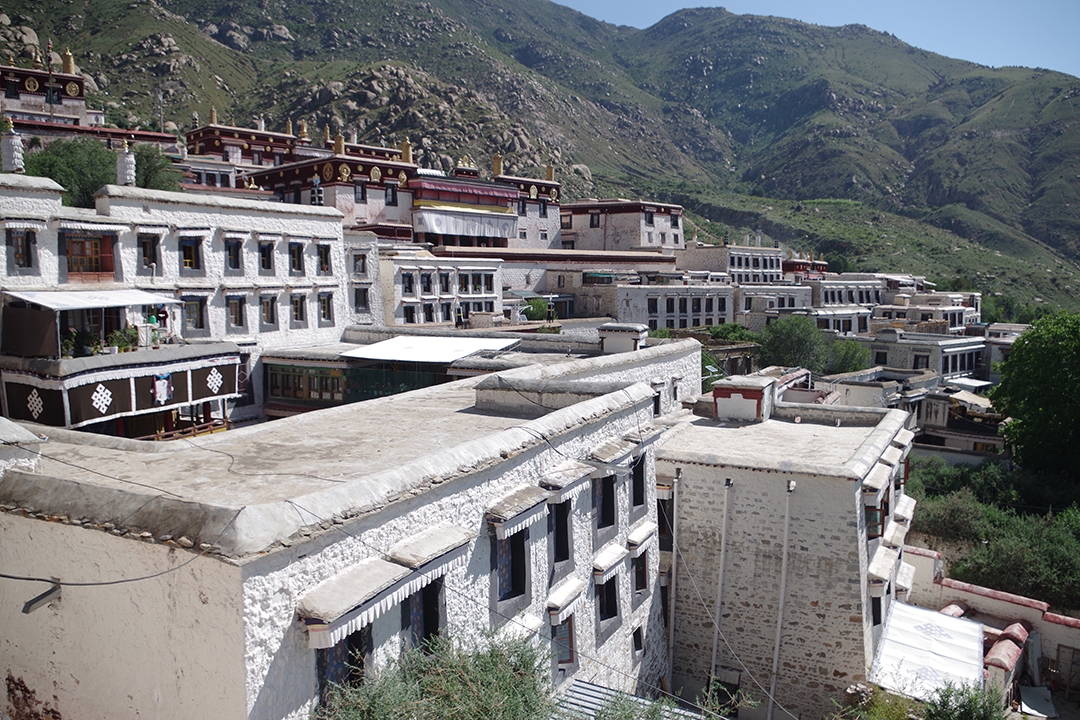
It was within this monastery that we discovered that not all Buddhists adhere to vegetarianism. The environmental conditions of Tibet are exceptionally hostile to agriculture, compounded by notoriously harsh winters. Consequently, Tibetan Buddhists subsist partly on yak meat, which features prominently on the menu of the monastery's own restaurant near the portal.
The rationale behind the monks' decision to include yak meat in their diet is rather compelling: Buddhists revere every sentient being, and by taking the life of a single yak—which can weigh in excess of half a ton—sustenance is provided for over 1,000 monks.
Lest we conclude on a culinary note, let us turn our attention to the monastery's greatest treasure: an immense thangka measuring a staggering 42 by 38 metres (approximately 1,600 square metres, or 16 ares). A thangka is a traditional Tibetan scroll painting on fabric, typically silk or linen, depicting the Buddha, various deities, protectors, or scenes relative to Buddhist cosmology.
The creation process is elaborate, spanning the stretching and preparation of the canvas, the drawing of geometric grids and outlines, the application of natural mineral pigments, and the addition of gold leaf embellishments. It culminates in the ritual of "opening the eyes", wherein the artist finally paints the pupils of the central figure, thereby causing the image to "awaken" and become a sacred spiritual object suitable for meditation and veneration.
Thangkas are available for purchase in Tibet, though prices vary exponentially. Those executed with genuine mineral pigments can command several hundred euros even for a diminutive 10 by 10-centimetre specimen, though more economical options painted with synthetic pigments are readily available for tourists.
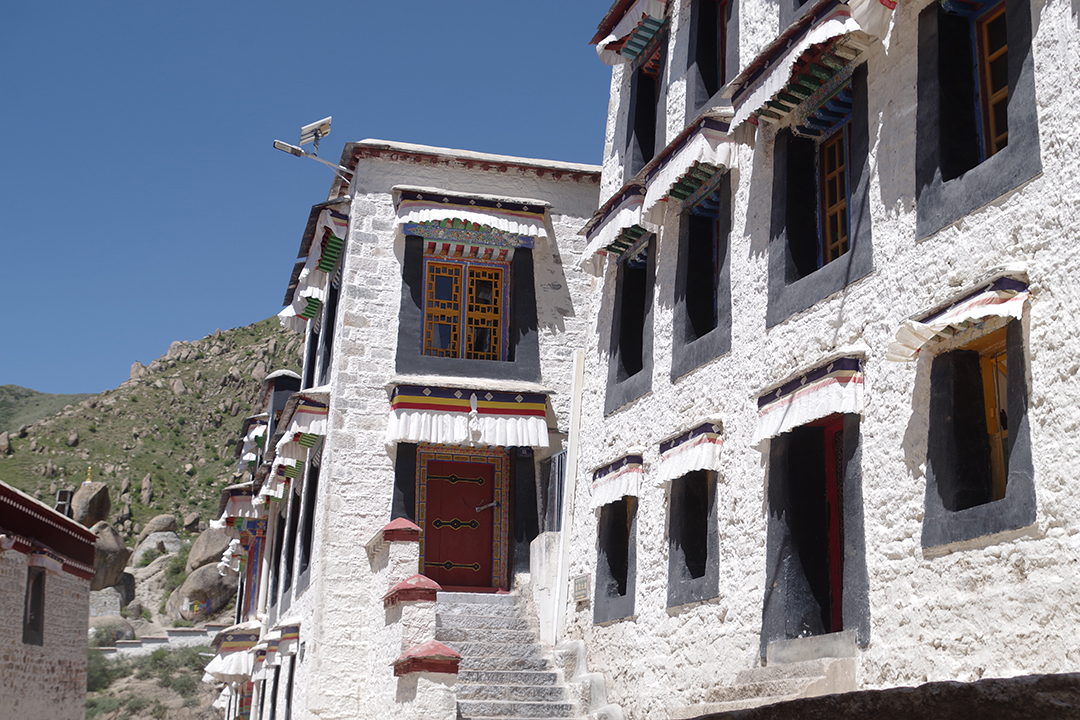
Having elucidated the nature of a thangka, we look now at the specific scroll measuring 16 ares. This gargantuan icon depicting the Buddha resides predominantly within the Doqen Assembly Hall, sequestered from solar radiation. It is unveiled to the world exclusively during the Shoton Festival, colloquially known as the Yogurt Festival. Shoton is a Tibetan celebration intertwining religious and secular customs, reaching its zenith with the unfurling of this monumental thangka at Drepung Monastery, accompanied by Tibetan operatic performances, folk dances, and the presentation of yogurt to the monastic community.
Sera Monastery is one of the grandest and most illustrious Buddhist monasteries in Lhasa, belonging to the Gelug school and dating back to the 15th century. It houses several thousand monks distributed across various colleges, dedicated to the study of philosophy, logic, Tantric practices, and ritual arts.
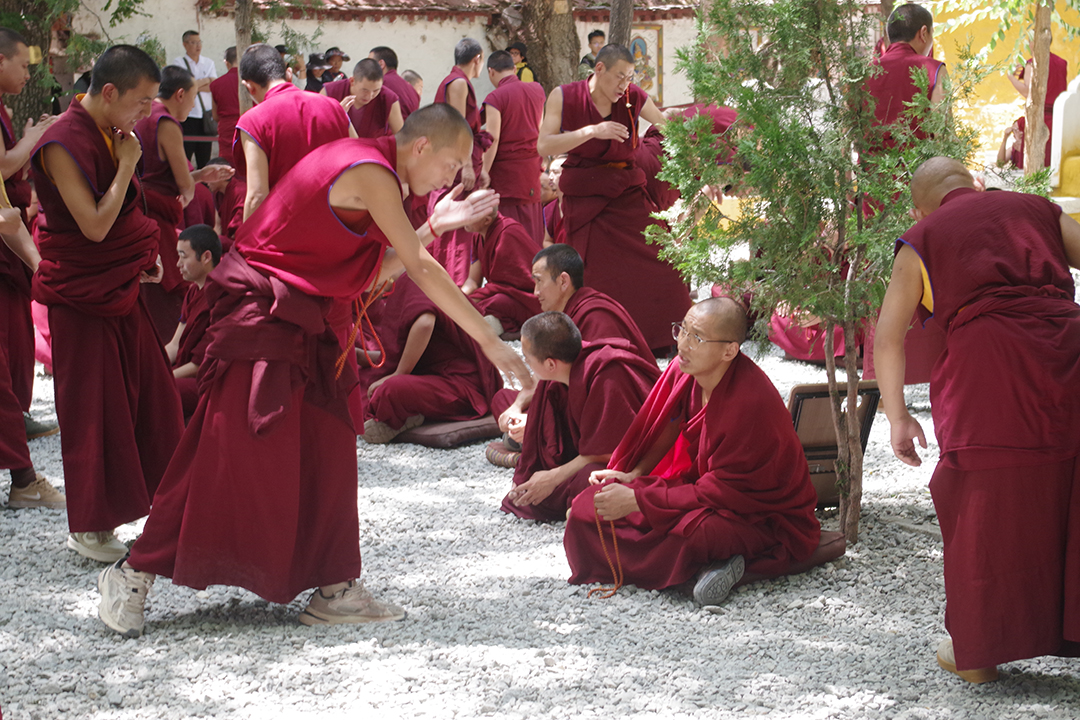
The most celebrated feature of Sera is its vibrant debating courtyard, where monks engage daily in dialectical debates to consolidate their erudition and comprehension of Buddhist tenets. To witness such a debate is an extraordinary experience. The disputation unfolds with a standing monk posing questions and challenges, while his seated counterpart offers rejoinders. The inquisitor frequently claps his hands sharply or strikes the ground to emphasise a point or elicit a response—a spectacle that is thoroughly enthralling for onlookers.
Whilst photography and filming are strictly prohibited throughout most areas of the monasteries, the monks' debate stands as a luminous exception where both are permitted.
Beyond academic pursuits, the monastery boasts magnificent architecture encompassing grand assembly halls, chapels, pagodas, and picturesque courtyards designed for ritual and contemplation. Sera is not merely a seat of learning but an essential cultural crucible where religious ceremonies, festivals, and pageants unfold, attracting devotees and travellers from across Tibet and beyond.
Although our description of Sera Monastery does not exhaust the wonders of Lhasa, it represents an opportune moment to plant a marker in our Tibetan travelogue, thereby concluding the first instalment.

Copyright (©) 2010 - 2026 Youth Hostel | Our Privacy Policy | Cookies | | RPC