Bucharest is located in south-eastern Romania, on the banks of the Dâmbovița River. The city is also the country’s capital and has a population of just over 1.5 million. Bucharest is a lively, fast-paced city that has developed rapidly in recent years. This contrasts with its eventful past, which was shaped above all by the communist dictator Nicolae Ceaușescu. The city is still somewhat overlooked by tourists, but the upside is fewer crowds and lower prices.
Bucharest is quite a young city, thought to have been founded in 1459. It became the capital of Romania in 1862, which helped the city grow and flourish. Bucharest combines old and new, with buildings from different periods and architectural styles standing side by side. Bucharest earned the nickname “Little Paris” thanks to the elegant architecture found in some of its more upmarket neighbourhoods.
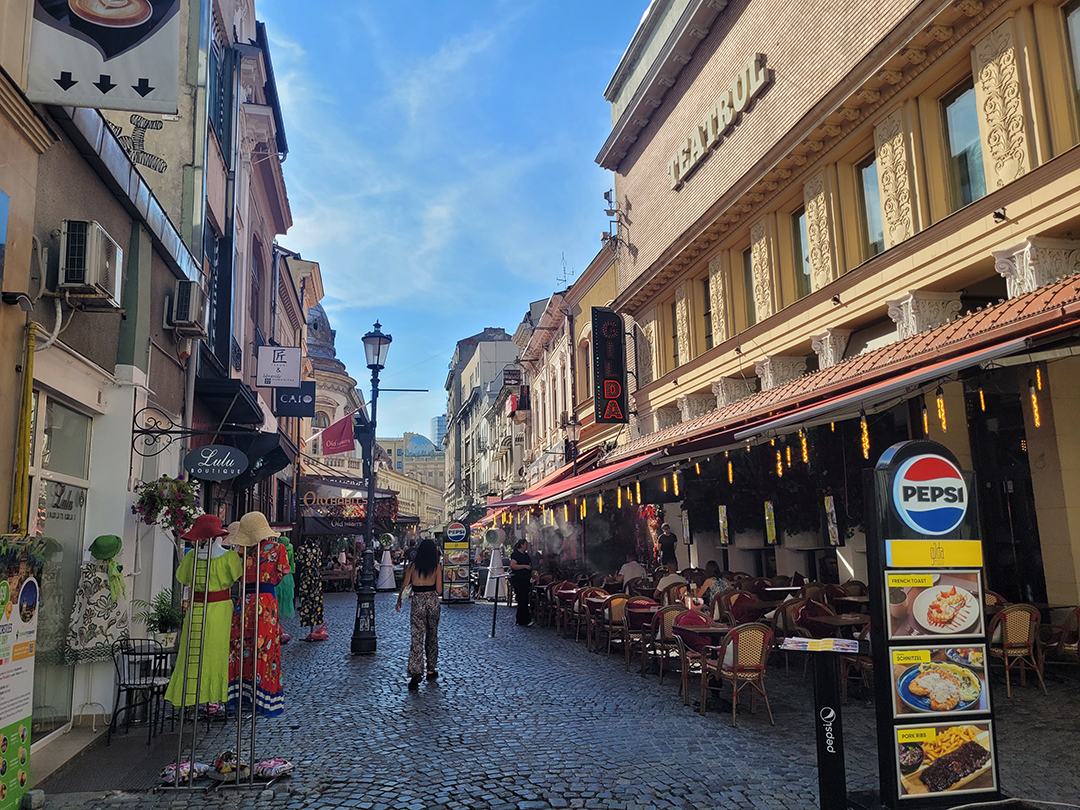
Bucharest’s Old Town, known as Centrul Vechi, is the heart of the city’s nightlife and entertainment. The main street is Calea Victoriei, where you’ll find many restaurants and cafés. In this part of the city, you can visit the Romanian Athenaeum concert hall and Stavropoleos Monastery. Nearby, you’ll also find the Macca-Vilacrosse Passage and Victoria Passage, with its colourful umbrellas overhead.
The city’s most important square is Revolution Square, where protests in December 1989 brought an end to Ceaușescu’s regime. For an authentic taste of Romanian food, head to Caru’ cu Bere, which has served traditional Romanian dishes since 1879. Also in the city centre is Cărturești Carusel, one of the most beautiful bookshops in the world, set inside a former bank.
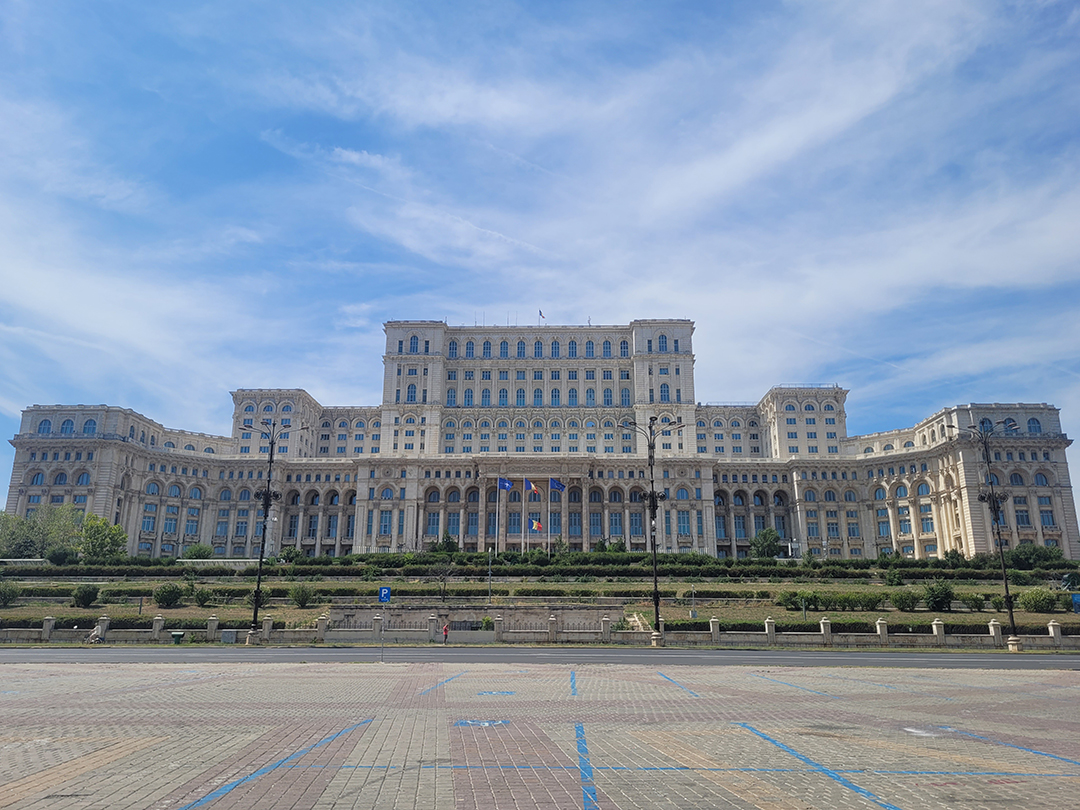
The Romanian Parliament sits on Dealul Arsenalului hill in the centre of Bucharest. It is considered the largest administrative building in the world, with staggering dimensions: 84 metres high, 365,000 square metres of floor space and a volume of 2.55 million cubic metres. It weighs an incredible 4.1 billion kilograms and is worth an estimated 3 billion euros, so it holds the titles of both the heaviest building and the most expensive administrative building in the world. The palace is also known for its lavish interior, which you can see on a guided tour.
After a devastating earthquake in 1977, Ceaușescu began rebuilding Bucharest. The Palace of Parliament became the centrepiece of his plans to reshape the city after Pyongyang in North Korea. Construction of the palace began in 1984 and took 13 years.
The Ceaușescu family home in the Spring District was originally built for former communist leader Gheorghe Gheorghiu-Dej. Ceaușescu moved in with his wife and three children in 1965, after Gheorghiu-Dej decided he no longer liked the house. The house was extended in 1972 and became known as the Spring Palace. It might not look like much from the outside, but the inside is surprisingly luxurious.
When you need a break from the busy city, Bucharest has many parks where you can relax. Cișmigiu Gardens is the city’s oldest and largest park that dates back to 1847. King Michael I Park is in the north of the city and surrounds Lake Herăstrău, where you can take a boat ride. Izvor Park is one of the newer parks in the city and is located near the Palace of Parliament.
There are several museums in Bucharest that are worth visiting. The most popular ones include the National Museum of Art of Romania, the National Museum of Romanian History, the Natural History Museum and the Military Museum. Of all the museums in the city, the Village Museum stands out the most. It was created by sociologist Dimitrie Gusti. This open-air ethnographic museum offers a fascinating look at life in the Romanian countryside. Nearby in the northern part of the city, you’ll find the Arch of Triumph, known as Arcul de Triumf in Romanian. The first wooden arch was built to mark Romania’s independence in 1878. The current monument was built in 1936 and bears a striking resemblance to the Arc de Triomphe in Paris.
Romania is also known as the land of castles. Most of them are found in Transylvania, which was an independent principality in the Middle Ages. Peleș Castle is located near the town of Sinaia. It was built in 1883 for Romania’s King Carol I, who fell in love with the beautiful mountain scenery there. Just under 50 kilometres from the castle lies Brașov, a city known for its beautiful old town and winter sports.
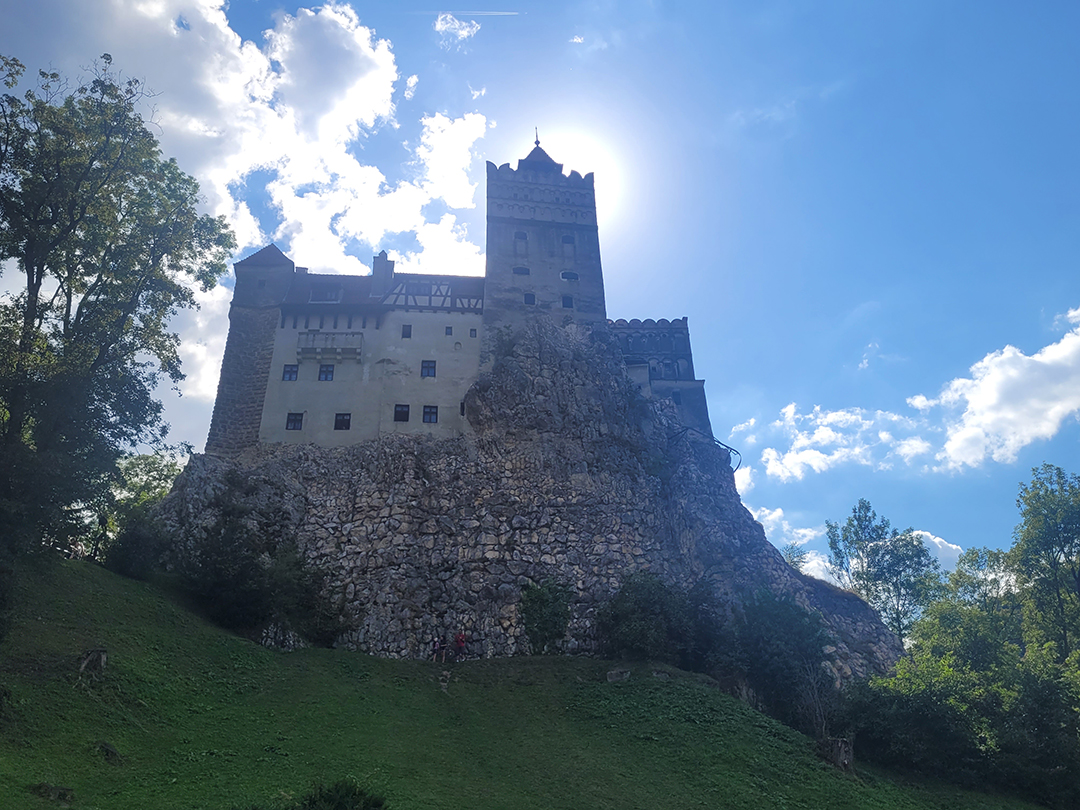
By far the most visited is Bran Castle, built in 1377 and better known as Dracula’s Castle. Unfortunately, there is no evidence that Irish writer Bram Stoker knew anything about the castle. It doesn’t even resemble his description in the book. The inspiration for the fictional character Dracula is said to have been the ruthless Wallachian prince Vlad the Impaler, who is not believed to have ever lived in the castle. As a result, several theories have emerged about which castle was the real home of Count Dracula, but according to legend, it remains Bran Castle.
Bucharest is one of the most unique cities in Europe and definitely deserves more attention from tourists. The city blends old and new with many green spaces to explore. You can learn about Romania’s history and the years it spent under Ceaușescu’s dictatorship. The Romanian Parliament is one of the most impressive buildings you’ll see, while Bran Castle has become an icon thanks to the books and films about Dracula.

Copyright (©) 2010 - 2026 Youth Hostel | Our Privacy Policy | Cookies | | RPC