In northern India, you'll find Delhi, the country's capital since 1911 and, with more than 30 million residents, the fourth-largest city in the world. The city is divided into New Delhi, built by the British during the colonial era, and Old Delhi, which dates back to the 17th century. Visiting the city feels like travelling through time, as no other Indian city reflects the country's transformation into what it is today quite so well. It is India's political and cultural centre, but also a city of contrasts, where wealth and poverty exist side by side. You'll also come across people from many different religions, which is what makes the city so multicultural.
The earliest records of the area around present-day Delhi date back to around 1000 BC, when it is believed to have been under the influence of the Maurya and Gupta empires. In the 12th century, it became the capital of the Delhi Sultanate. When the Mughals came to power in the 16th century, the city entered its golden age and what is now Old Delhi began to take shape. In 1803, the city came under British rule, and traces of the colonial era can still be seen today. In 1947, India gained independence, and Delhi became the capital of the newly independent nation.
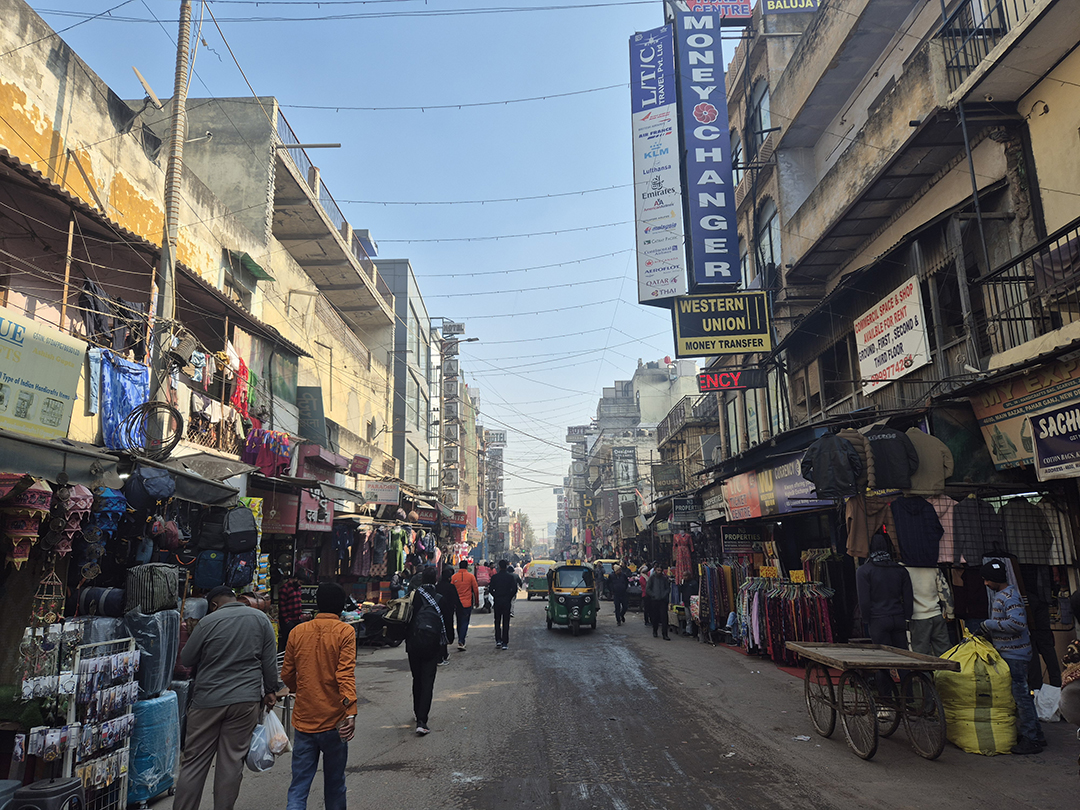
Old Delhi is the city's historic heart and one of the most chaotic parts of India. It was founded in 1639 by the Mughal emperor Shah Jahan as the capital of the Mughal Empire and was originally known as Shahjahanabad. Although it lost its political importance under British rule, it has retained its unique character and continues to draw visitors to its many historic landmarks.
The Red Fort is probably the most impressive sight in the area. Built from red sandstone in the 17th century, it was home to the Mughal emperors for more than 200 years. The Mughal emperors also built Jama Masjid during the same period. With its three large domes and two towering minarets, it is one of the largest mosques in the city and can hold more than 25,000 worshippers. If you're exploring Old Delhi, don't miss Jhandewalan Mandir and the spice market in Chandni Chowk, the largest of its kind in all of Asia.
Delhi is home to more than 2,000 Hindu temples. The most impressive of them all is Swaminarayan Akshardham, the largest Hindu temple complex in the world. Completed in 2005 using only traditional building techniques, the temple was built in honour of Bhagwan Swaminarayan, an important Hindu spiritual leader and reformer.
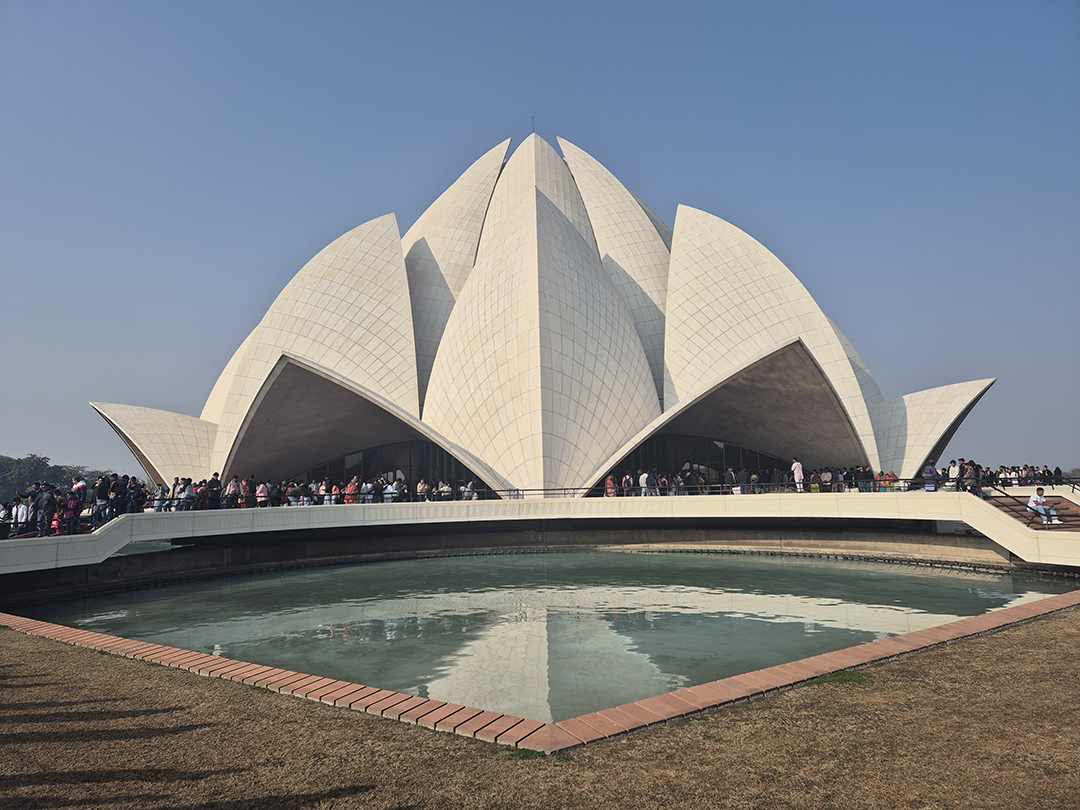
The Lotus Temple, designed in the shape of a lotus flower, was completed in 1986. It is one of only seven Baháʼí Houses of Worship in the world and is open to people of all faiths, which reflects the religion's belief in the unity of humanity.
Much older is Gurdwara Bangla Sahib, which was built in the 17th century during the time of the eighth Sikh Guru, Har Krishan. It is one of the largest Sikh places of worship and is best known for its striking golden dome. Kalkaji Mandir was built in the 18th century and is dedicated to the goddess Kali, who represents strength, protection and spiritual transformation.
After the Mughal emperor Humayun died, his widow commissioned Humayun's Tomb in 1569. It was the first major Mughal garden tomb in India and later became the inspiration for the Taj Mahal. In contrast, Safdarjung's Tomb is one of the last great Mughal monuments built in India. It was built in 1754 as the final resting place of the powerful Mughal nobleman Safdarjung. Not far from the tombs, you'll also find two of the city's largest public parks, Sunder Nursery and Lodhi Gardens.
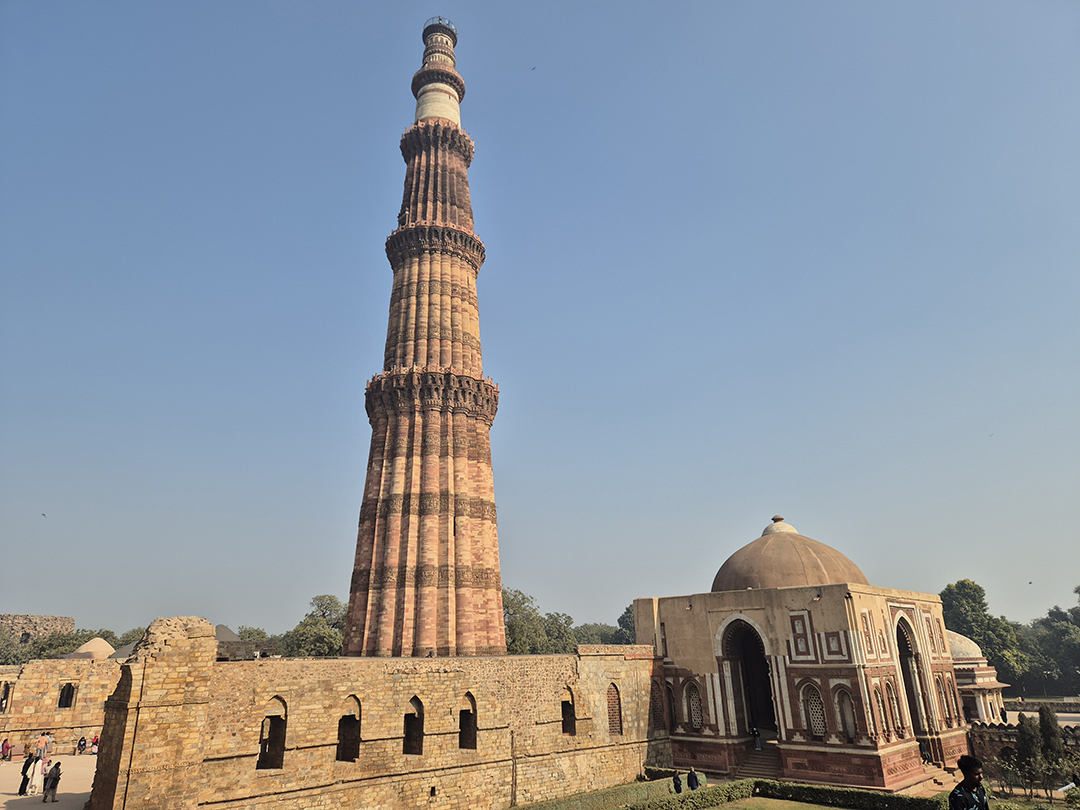
Qutub Minar is a 73-metre-tall, five-storey tower built from red sandstone and marble. Construction began in the late 12th century under the Muslim ruler Qutb-ud-din Aibak, which is why verses from the Quran are carved into its walls. The tower's original purpose is not entirely clear. Some believe it was built as a minaret, while others say it was intended as a victory tower to mark the beginning of Muslim rule in northern India.
India Gate is a 42-metre-high triumphal arch, built from sandstone and granite in 1931. The monument honours Indian soldiers who lost their lives in the First World War and the Third Anglo-Afghan War. More than 13,000 names of fallen soldiers are carved into the stone, while an eternal flame beneath the arch has burned since 1971 in memory of those who lost their lives in the war with Pakistan. Close to India Gate are the official residence of the President of India, the Indian Parliament and the National Museum.
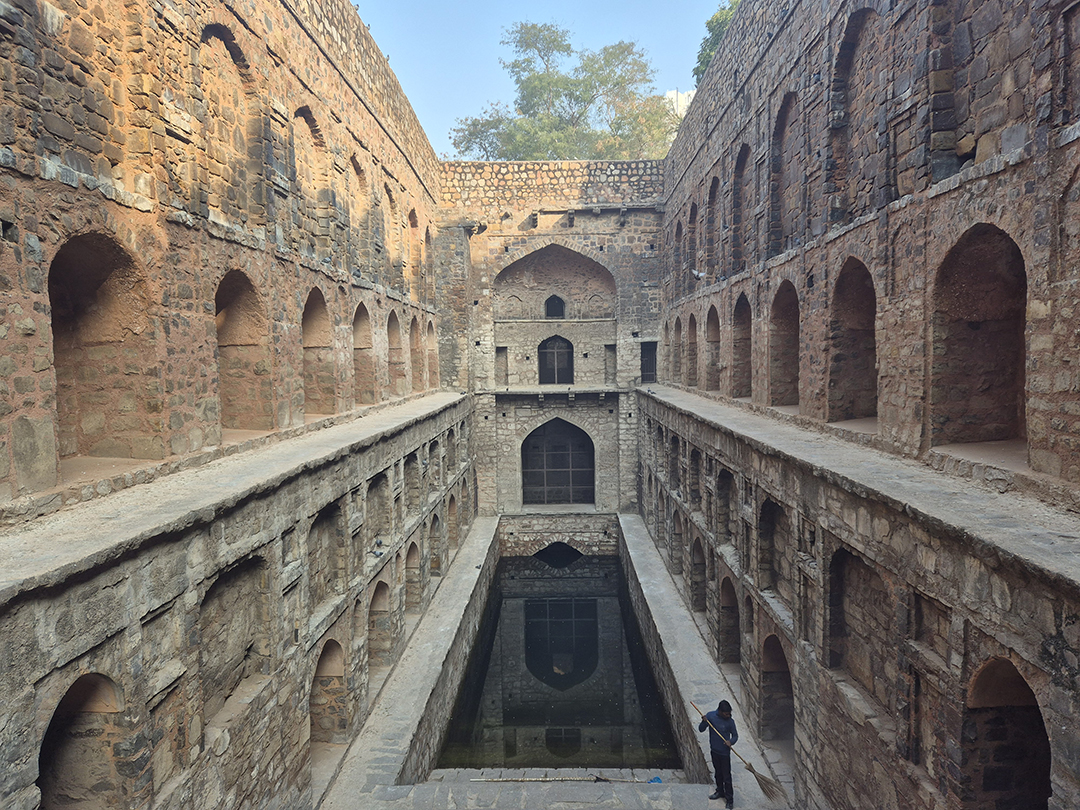
Agrasen Ki Baoli is an ancient stepwell around 60 metres long, with a series of steps leading down to the water. According to legend, it was built during the reign of King Agrasen, although historians believe it took its present form in the 14th century. In the past, it played an important role in storing water, especially during dry periods, and served as a popular gathering place. It's also said to be haunted, and there are plenty of eerie legends about ghosts and curses.
Jantar Mantar is an 18th-century astronomical observatory with a collection of giant stone instruments used to observe the stars and planets and measure time. The most famous instrument is Samrat Yantra, a huge sundial that can measure time to within a few seconds.
Connaught Place is Delhi's main shopping and entertainment district, right in the heart of the city. It was built in the early 20th century during British rule and was named after the Duke of Connaught. Its circular layout features two rings of buildings with elegant colonnades and white pillars, with Central Park sitting in the middle.
Delhi offers one of the most authentic experiences of modern India, while also giving you a glimpse of the country's past. It's also the perfect place to begin a trip around India and is one of the three stops on the famous Golden Triangle route. The other two points on the route are the Pink City of Jaipur, the capital of Rajasthan, and Agra, home to the Taj Mahal, one of the Seven Wonders of the Modern World.

Copyright (©) 2010 - 2026 Youth Hostel | Our Privacy Policy | Cookies | | RPC